- Home
- Plant guide
- Short-Toothed Mountain Mint
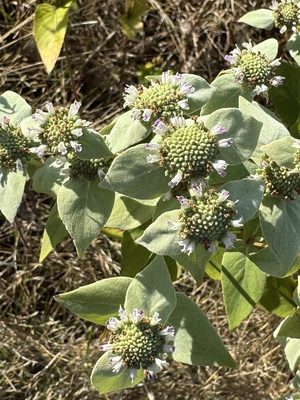
Bob Dodge (CC BY)
Short-Toothed Mountain Mint
Pycnanthemum muticum
Trial after trial names it the single most attractive plant to pollinators, and deer won't touch it.
Native to: the Northeast · the Mid-Atlantic · the Southeast · the Midwest
Growing Short-Toothed Mountain Mint
The shimmering silver bracts look good for months. Spreads steadily by rhizome; site it where it can colonize or corral it with a root barrier.
Where it belongs
Short-toothed mountain mint is native to the Northeast, Mid-Atlantic, Southeast, and parts of the Midwest, growing in moist meadows, open woods, and thickets.
It is worth stating plainly why it appears on so many recommended lists. In side-by-side plantings run by university trial gardens, including the long-running Mt. Cuba Center trials, mountain mints have repeatedly recorded more pollinator visits, and a wider range of visiting species, than the other perennials in the trial. That is a measured result from specific trials rather than a claim about every garden, but it is a strong reason to include one.
Growing it
Full sun to part sun, medium to dry soil, in loam or clay, zones 4 to 8. Two to three feet, and about as wide.
It is in the mint family and it behaves like it. Rhizomes push outward steadily, a few inches to a foot a year depending on how much it likes the site. This is not garden mint, which colonizes violently, but it will make a patch. Site it where a patch is fine, or sink a barrier, or pull the outer edge each spring.
The ornamental feature is not really the flower. The small white blooms are surrounded by bracts that look dusted with silver frost, and those bracts hold from July into September, so the plant reads as silver for a quarter of the year. It pairs well with anything purple.
What it feeds
The flowers are small and open, which puts the nectar within reach of nearly everything. That is the mechanical reason for the trial results.
Visitors include an unusually long list of small native bees, wasps of many kinds, flower flies, beetles, skippers, and larger butterflies including monarchs and swallowtails. Predatory wasps are conspicuous on it, and their larvae feed on caterpillars and other insects around the yard.
Bloom runs from midsummer into early fall, covering the gap between the summer perennials and the asters.
Living with it
Deer do not eat it, and the reason is obvious the moment you brush against it. The whole plant smells strongly of spearmint and the foliage is unpalatable. This is one of the genuinely reliable deer-resistant natives.
Drought tolerant once established. No staking, no dividing needed except to control the spread.
Leave stems standing for winter; cut back in spring.
Sources: USDA PLANTS Database (native range); Mt. Cuba Center (published native perennial trial results for Pycnanthemum); Lady Bird Johnson Wildflower Center, University of Texas at Austin (species profile).
It’s deer-resistant, drought-tolerant, fragrant, and long-blooming.Where it grows
Short-Toothed Mountain Mint is native to the Northeast. In the wild you’ll find it across Alabama · Arkansas · Connecticut · Delaware · Florida · Georgia · Illinois · Indiana · Iowa · Kentucky and 24 more states. Always confirm it suits your specific county with your state native plant society before planting.
Regional Garden has written state guides covering Short-Toothed Mountain Mint in 34 of them so far.
Good for
Where to buy Short-Toothed Mountain Mint
Some links here are affiliate links and we may earn a small commission at no extra cost to you.
What a first-year Short-Toothed Mountain Mint planting needs, from a pH kit to mulch.
Companions & kin.
Natives that share Short-Toothed Mountain Mint’s range and conditions.
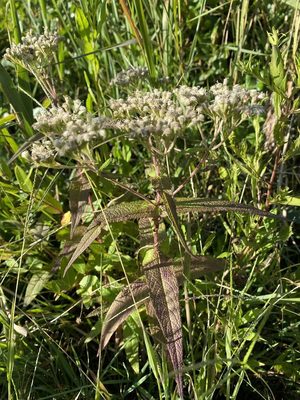
Common Boneset
Eupatorium perfoliatum
Frothy white heads alive with small native bees and wasps, for ground that stays damp.
- Full–part sun
- Average–wet
- 3–5 ft
- Blooms Aug–Sep
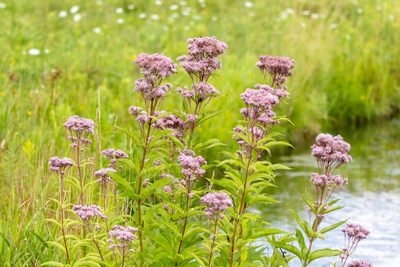
Spotted Joe-Pye Weed
Eutrochium maculatum
Statuesque domes of vanilla-scented mauve that swallowtails and monarchs cover in late summer.
- Full–part sun
- Average–wet
- 4–7 ft
- Blooms Jul–Sep

Wild Bergamot
Monarda fistulosa
Ragged lavender crowns that hum with bees, hummingbirds, and clearwing moths; foliage smells of oregano.
- Full–part sun
- Dry–average
- 2–4 ft
- Blooms Jun–Aug
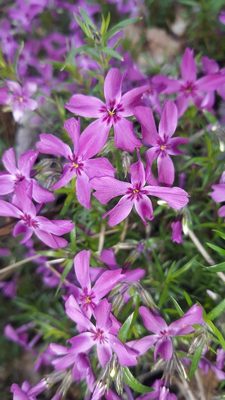
Creeping Phlox
Phlox subulata
A sheet of spring color that spills over walls and stitches a dry, sunny slope together.
- Full–part sun
- Dry–average
- 4–8 in
- Blooms Apr–May