- Home
- Plant guide
- Creeping Phlox
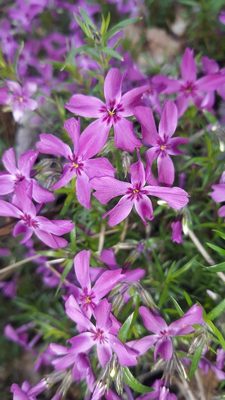
Lindsey G. (CC BY)
Creeping Phlox
Phlox subulata
A sheet of spring color that spills over walls and stitches a dry, sunny slope together.
Native to: the Northeast · the Mid-Atlantic · the Southeast · the Midwest
Growing Creeping Phlox
Evergreen, mat-forming, and tough as nails in lean rocky soil. One of the earliest nectar sources for spring butterflies.
Where it belongs
Creeping phlox, also called moss phlox, is native to the Northeast, Mid-Atlantic, Southeast, and parts of the Midwest, growing on rocky slopes, shale barrens, gravelly banks, and dry open ledges.
Most people know it from suburban front yards, where it is planted so widely that it barely registers as a native plant. It is one, and its natural habitat explains everything about how to grow it: thin soil, sharp drainage, full exposure, and no competition.
Do not confuse it with woodland phlox, which is the upright, fragrant, shade species for moist woods. Same genus, opposite conditions.
Growing it
Full sun to part sun, dry to medium soil, in rocky ground, sand, or lean loam, zones 3 to 9. Four to eight inches tall, spreading to two feet or more.
Drainage decides whether it thrives or rots. Rich, damp, heavily mulched beds kill it slowly from the center out. Gravel, a wall top, the crown of a slope, and the edge of a path are all good.
The foliage is needle-like and evergreen, so the mat is there year round rather than appearing in spring and vanishing.
It works as a functional plant, not only a decorative one. On a dry sunny bank that sheds soil in every storm, the dense mat and shallow roots knit the surface together. Plant on the slope face and let it run downhill.
Shear it back by a third after flowering. That keeps the mat dense and prevents the bare woody centers that make old plantings look moth-eaten.
What it feeds
The bloom lands in April and May, ahead of nearly everything else in a sunny garden.
The flowers are shallow tubes with flat faces, which suits butterflies. Spring azures, elfins, swallowtails, and the first skippers work it, and in early spring there is very little competition for their attention. Bee flies hover at it. Hummingbirds visit where their arrival overlaps.
It is a small but genuinely early nectar source, which is worth more than its size suggests.
Living with it
Deer and rabbits generally leave it alone.
Many named color selections exist, from white through pink to strong purple, and they feed insects the same as the wild forms.
No fall cleanup and no winter protection. The one recurring problem is planting it somewhere too rich and too wet, which no amount of care corrects.
Sources: USDA PLANTS Database (native range); Lady Bird Johnson Wildflower Center, University of Texas at Austin (species profile); Mt. Cuba Center (Phlox trial results on garden performance and pollinator visits).
It’s deer-resistant, drought-tolerant, and evergreen.Where it grows
Creeping Phlox is native to the Northeast. In the wild you’ll find it across Alabama · Arkansas · Connecticut · Delaware · Florida · Georgia · Illinois · Indiana · Iowa · Kentucky and 24 more states. Always confirm it suits your specific county with your state native plant society before planting.
Regional Garden has written state guides covering Creeping Phlox in 34 of them so far.
Good for
Where to buy Creeping Phlox
Some links here are affiliate links and we may earn a small commission at no extra cost to you.
What a first-year Creeping Phlox planting needs, from a pH kit to mulch.
Companions & kin.
Natives that share Creeping Phlox’s range and conditions.
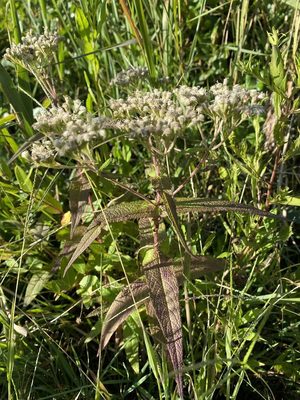
Common Boneset
Eupatorium perfoliatum
Frothy white heads alive with small native bees and wasps, for ground that stays damp.
- Full–part sun
- Average–wet
- 3–5 ft
- Blooms Aug–Sep
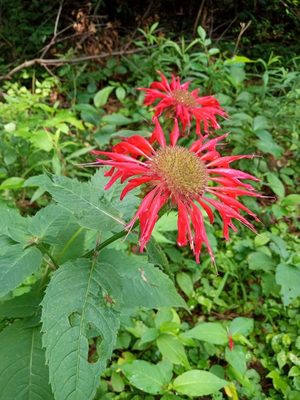
Scarlet Beebalm
Monarda didyma
A hummingbird magnet with fireworks-red blooms for moist, rich soil at a woodland edge.
- Full–part sun
- Average–wet
- 2.5–4 ft
- Blooms Jul–Aug
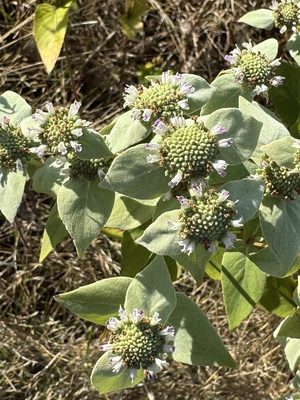
Short-Toothed Mountain Mint
Pycnanthemum muticum
Trial after trial names it the single most attractive plant to pollinators, and deer won't touch it.
- Full–part sun
- Dry–average
- 2–3 ft
- Blooms Jul–Sep
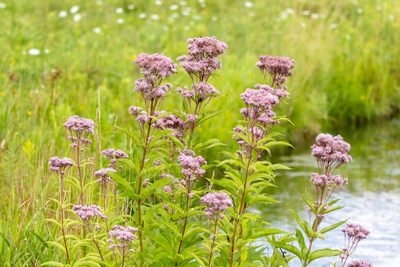
Spotted Joe-Pye Weed
Eutrochium maculatum
Statuesque domes of vanilla-scented mauve that swallowtails and monarchs cover in late summer.
- Full–part sun
- Average–wet
- 4–7 ft
- Blooms Jul–Sep