- Home
- Plant guide
- Scarlet Beebalm
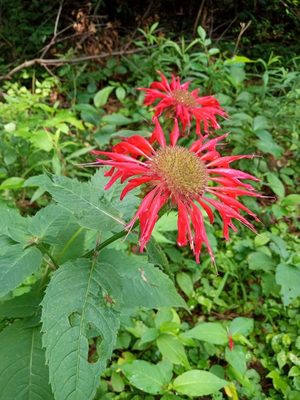
Paul Roots (CC BY)
Scarlet Beebalm
Monarda didyma
A hummingbird magnet with fireworks-red blooms for moist, rich soil at a woodland edge.
Native to: the Northeast · the Mid-Atlantic · the Southeast · the Midwest
Growing Scarlet Beebalm
Wants more moisture and richer soil than wild bergamot. Divide every few years to keep clumps vigorous and reduce mildew.
Where it belongs
Scarlet beebalm, also called Oswego tea, is native to the Northeast, the Mid-Atlantic, the mountains of the Southeast, and parts of the Midwest. In the wild it grows in moist ground at woodland edges, along streams, and in bottom land where the soil is rich.
It is worth being clear about how it differs from wild bergamot, its lavender cousin, because the two get sold interchangeably and want opposite things. Wild bergamot is a dry-prairie plant that shrugs at drought. This one wants moisture and fertility, and it sulks in the lean, sunny, well-drained spot where bergamot thrives.
Growing it
Full sun to part sun, medium to wet soil, loam or clay, zones 4 to 9. It runs thirty inches to four feet.
It spreads by shallow runners into a widening mat, which is easy to manage: pull the outer growth in spring, or lift and divide the whole clump every two or three years. Division is not optional maintenance so much as the thing that keeps it flowering well, because the center of an old clump dies out.
Powdery mildew is the recurring complaint. It is a moisture and airflow issue rather than a disease you fight with a spray. Give it room, do not crowd it against a fence, water at the base rather than over the leaves, and thin the stems in spring. Some plants will still gray up by August, which is cosmetic.
What it feeds
The flower is a whorl of long red tubes, and that shape and color are aimed at hummingbirds. Ruby-throats work it hard through July and August, which is exactly when their young have fledged and demand is highest.
Bumblebees get in from the front; smaller bees often cut in at the base of the tube instead. Sphinx moths visit at dusk. Fritillaries and swallowtails come for it as well.
Living with it
Deer generally leave it alone, since the whole plant is aromatic. Crushed leaves smell strongly of oregano and thyme, and they have a long history of use as a tea, which is where the Oswego name comes from.
Leave stems standing over winter. Stem-nesting bees use hollow perennial stems, and cutting everything to the ground in fall removes that. Cut back in spring to about a foot, then again once new growth is up.
Sources: USDA PLANTS Database (native status and range); Lady Bird Johnson Wildflower Center, University of Texas at Austin (species profile); Cornell Lab of Ornithology (hummingbird plantings).
It’s fragrant, showy, and long-blooming.Where it grows
Scarlet Beebalm is native to the Northeast. In the wild you’ll find it across Alabama · Arkansas · Connecticut · Delaware · Florida · Georgia · Illinois · Indiana · Iowa · Kentucky and 24 more states. Always confirm it suits your specific county with your state native plant society before planting.
Regional Garden has written state guides covering Scarlet Beebalm in 34 of them so far.
Good for
Where to buy Scarlet Beebalm
Some links here are affiliate links and we may earn a small commission at no extra cost to you.
What a first-year Scarlet Beebalm planting needs, from a pH kit to mulch.
Companions & kin.
Natives that share Scarlet Beebalm’s range and conditions.

Wild Bergamot
Monarda fistulosa
Ragged lavender crowns that hum with bees, hummingbirds, and clearwing moths; foliage smells of oregano.
- Full–part sun
- Dry–average
- 2–4 ft
- Blooms Jun–Aug
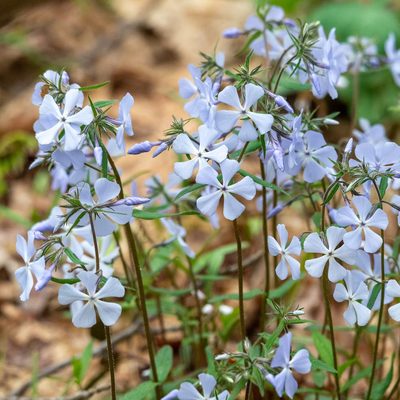
Woodland Phlox
Phlox divaricata
A sweetly fragrant, low spreading phlox that carpets the spring woodland floor in blue.
- Part shade
- Average
- 10–15 in
- Blooms Apr–May
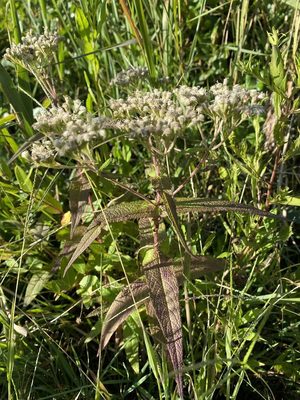
Common Boneset
Eupatorium perfoliatum
Frothy white heads alive with small native bees and wasps, for ground that stays damp.
- Full–part sun
- Average–wet
- 3–5 ft
- Blooms Aug–Sep
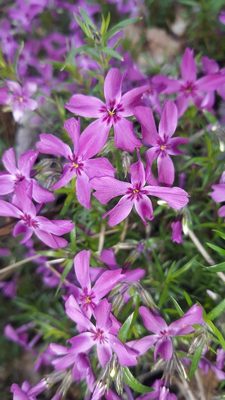
Creeping Phlox
Phlox subulata
A sheet of spring color that spills over walls and stitches a dry, sunny slope together.
- Full–part sun
- Dry–average
- 4–8 in
- Blooms Apr–May