- Home
- Plant guide
- Wild Bleeding Heart
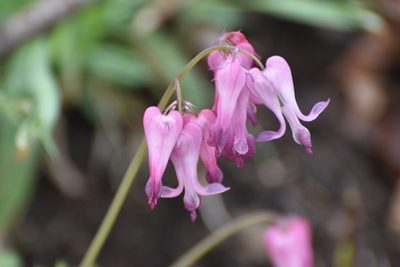
Ryan Watson (CC BY)
Wild Bleeding Heart
Dicentra eximia
Ferny mounds that drip with pink hearts from spring straight through summer in shade.
Native to: the Northeast · the Mid-Atlantic · the Southeast
Growing Wild Bleeding Heart
Unlike Asian bleeding heart it doesn't go dormant, blooming for months in cool shade. Reseeds gently into rock crevices and shaded slopes.
Where it belongs
Wild bleeding heart is native to the Appalachians and the eastern states, from the Northeast down through the Mid-Atlantic and into the Southeast, growing on rocky wooded slopes, at cliff bases, and in the crevices of shaded ledges.
The comparison that matters is with old-fashioned bleeding heart, the Asian species with the arching wands of large pink hearts. That plant is spectacular for three weeks in May and then yellows and disappears entirely by early summer, leaving a hole. This one is smaller in flower and vastly longer in season.
Growing it
Part sun to shade, medium moisture, in loam or rocky ground, zones 3 to 8. Twelve to eighteen inches, mounding.
It wants drainage more than richness, which follows from its habitat on rocky slopes. Soggy ground in winter is the reliable way to kill it. Grit worked into a flat bed helps; a slope helps more.
Cool shade extends the bloom. In a hot exposed spot it flowers in spring, pauses through the heat, and picks up again in fall. In cool moist shade it can carry almost continuously from April into August, which almost no other shade perennial does.
It seeds itself gently into crevices and shaded gravel. Volunteers in odd corners are part of how it looks best.
What it feeds
The flower is a flattened pink heart, closed at the tip and holding nectar at the top of the spurs. Getting in requires strength and a long tongue.
Bumblebees are the primary visitors and are essentially the only insects that can work it properly. Hummingbirds take nectar from it as well. Shorter-tongued bees frequently rob it by biting through the spur.
The long bloom period is the contribution. A plant that offers bumblebees forage from April to August covers the queens founding colonies, the workers through midsummer, and the new queens at the end, which is a full season from one plant in shade.
Seeds carry an oil-rich attachment that ants collect, carrying the seed underground and planting it in the process.
Living with it
Deer generally avoid it, and rabbits usually do too. The foliage contains alkaloids and is not something to eat.
It combines well with foamflower, wild geranium, and Christmas fern, and it is a good partner for Virginia bluebells because it is fully leafed out and flowering when the bluebells go dormant.
Shear it lightly in midsummer if it looks tired; fresh foliage and a second flush follow.
Sources: USDA PLANTS Database (native range); Lady Bird Johnson Wildflower Center, University of Texas at Austin (species profile); Xerces Society (bumblebee colony cycle and season-long forage).
It’s deer-resistant, long-blooming, and showy.Where it grows
Wild Bleeding Heart is native to the Northeast. In the wild you’ll find it across Alabama · Arkansas · Connecticut · Delaware · Florida · Georgia · Kentucky · Louisiana · Maine · Maryland and 18 more states. Always confirm it suits your specific county with your state native plant society before planting.
Regional Garden has written state guides covering Wild Bleeding Heart in 28 of them so far.
Good for
Where to buy Wild Bleeding Heart
Some links here are affiliate links and we may earn a small commission at no extra cost to you.
What a first-year Wild Bleeding Heart planting needs, from a pH kit to mulch.
Companions & kin.
Natives that share Wild Bleeding Heart’s range and conditions.
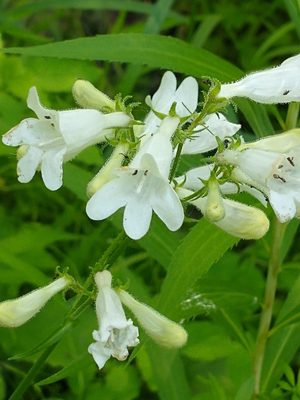
Foxglove Beardtongue
Penstemon digitalis
Airy white bells in early summer, a bridge bloom between spring ephemerals and the summer prairie.
- Full–part sun
- Dry–average
- 2–4 ft
- Blooms May–Jun
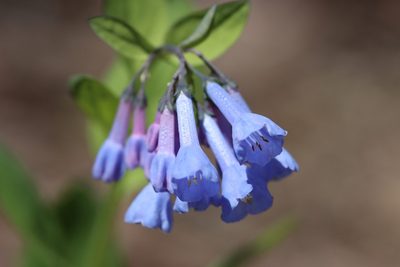
Virginia Bluebells
Mertensia virginica
Pink buds opening to drifts of sky-blue bells, then vanishing underground by summer.
- Part shade
- Average–wet
- 1–2 ft
- Blooms Mar–May
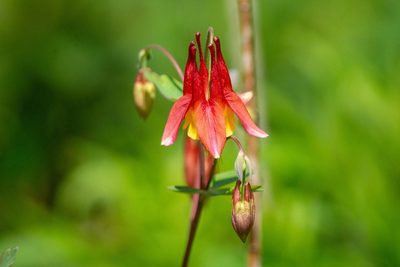
Wild Columbine
Aquilegia canadensis
Nodding red-and-gold lanterns that greet the first spring hummingbirds at a woodland edge.
- Part shade
- Dry–average
- 1–2.5 ft
- Blooms Apr–Jun

Buttonbush
Cephalanthus occidentalis
Spherical white 'pincushion' flowers over standing water, swarmed by butterflies and bees.
- Full–part sun
- Average–wet
- 5–10 ft
- Blooms Jun–Aug