- Home
- Plant guide
- Bearberry
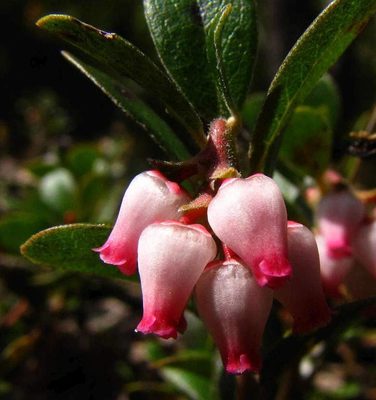
christine123 (CC BY)
Bearberry
Arctostaphylos uva-ursi
A glossy evergreen mat that grips sandy, sunny banks where nothing else will hold, even by the sea.
Native to: the Northeast · the Midwest · the Mountain West · the Great Basin · the Pacific Northwest
Growing Bearberry
Also called kinnikinnick, it thrives in cold, poor, sandy soil and salt spray. Red berries hang on into winter for birds; spring bells feed early bees.
Where it belongs
Bearberry, also called kinnikinnick, is native to the northern Northeast, Midwest, Mountain West, Great Basin, and Pacific Northwest, growing on dunes, rocky barrens, sandy pine woods, and exposed alpine and coastal ground. It circles the northern hemisphere and grows farther north than almost any other broadleaf evergreen.
It is a plant for hard sites. Sandy soil with no fertility, a coastal bank taking salt spray, a road edge, a cold exposed slope: these are conditions that defeat ordinary groundcovers, and this one is adapted to them specifically.
Note the hardiness range, zones 2 to 6. This is a cold-climate plant, and it performs poorly in hot humid summers. Southern gardeners should look elsewhere.
Growing it
Full sun to part sun, dry soil, in sand or rocky ground, zones 2 to 6. Four to eight inches tall, spreading three to six feet.
Poor acidic soil and sharp drainage. Rich, fertile, or limey soil is wrong for it, and so is anything that stays wet.
It is famously slow and difficult to establish, and this is the one real obstacle. Plants sulk for a year or two before they begin to run. Buy small container stock, plant in spring, keep it watered through the first season only, and do not amend the soil around it.
Once established it spreads by trailing stems that root as they go, forming a dense low mat that holds soil in place on a slope.
Do not mulch heavily over the stems, which need to reach soil to root.
What it feeds
Small pink-white urn-shaped flowers open in April and May, and their shape means bumblebees and other long-tongued bees are the main visitors, with hummingbirds taking nectar as well. It is early-season forage in cold regions where the season starts late and starts thin.
Specialist bees collect from Arctostaphylos.
Red berries follow and persist into winter, and they are low-preference fruit that birds turn to when better food is gone, which makes them a late-winter reserve. Grouse, wild turkey, and songbirds take them. Bears eat them too, which is where the name comes from.
The evergreen mat provides ground-level cover in open exposed country.
Living with it
Deer generally leave it alone, and it tolerates salt, which makes it useful along walks and drives that get winter de-icing.
The leaves have a long documented history of use in traditional medicine and in smoking mixtures, which is where kinnikinnick comes from. It contains compounds that are not safe in quantity, and it is grown here as a groundcover.
There is no maintenance. Do not shear it, do not fertilize it, and do not water it after the first year.
Sources: USDA PLANTS Database (native range); Lady Bird Johnson Wildflower Center, University of Texas at Austin (species profile and establishment); USDA Natural Resources Conservation Service (plant guide, erosion control and wildlife use).
It’s deer-resistant, drought-tolerant, evergreen, and salt-tolerant.Where it grows
Bearberry is native to the Northeast. In the wild you’ll find it across Arizona · California · Colorado · Connecticut · Idaho · Illinois · Indiana · Iowa · Kentucky · Maine and 21 more states. Always confirm it suits your specific county with your state native plant society before planting.
Regional Garden has written state guides covering Bearberry in 31 of them so far.
Good for
Where to buy Bearberry
Some links here are affiliate links and we may earn a small commission at no extra cost to you.
What a first-year Bearberry planting needs, from a pH kit to mulch.
Companions & kin.
Natives that share Bearberry’s range and conditions.
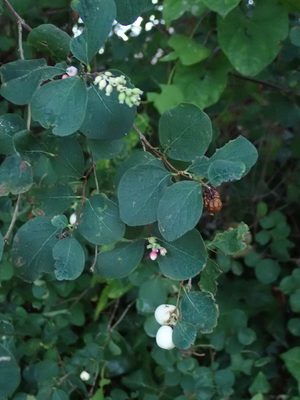
Common Snowberry
Symphoricarpos albus
The shrub that will grow where nothing else will, and hangs white berries on bare stems all winter.
- Sun to shade
- Dry–average
- 3–6 ft
- Blooms Jun–Jul

Common Yarrow
Achillea millefolium
A near-continental native with flat flower heads that feed tiny beneficial insects, tough as a weed.
- Full sun
- Dry–average
- 1.5–3 ft
- Blooms May–Aug

Golden Currant
Ribes aureum
Yellow spring flowers that smell of cloves, black fruit birds strip in a week, and red foliage in the fall.
- Full–part sun
- Dry–average
- 4–8 ft
- Blooms Apr–May
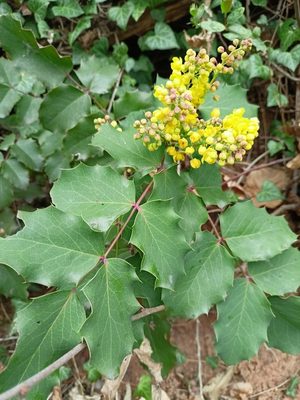
Oregon Grape
Berberis aquifolium
Holly-like evergreen leaves, fragrant yellow spring flowers, and blue berries. It is Oregon's state flower.
- Sun to shade
- Dry–average
- 3–6 ft
- Blooms Mar–Apr