- Home
- Plant guide
- Blue Grama
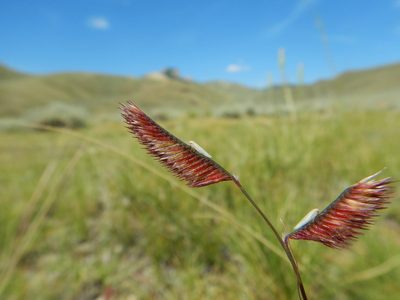
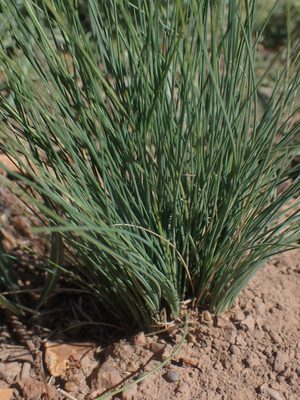
Matt Lavin (CC BY)
Blue Grama
Bouteloua gracilis
A fine, low prairie grass with quirky horizontal 'eyebrow' seed heads, and a great no-water lawn.
Native to: the Great Plains · the Mountain West · the desert Southwest · the Great Basin · the South-Central region
Growing Blue Grama
The toughest of the low native grasses for hot, dry, alkaline ground. Mixed with buffalograss it makes a true low-water native lawn.
Where it belongs
Blue grama is native to the Plains, Mountain West, Southwest, Great Basin, and Texas, growing on shortgrass prairie, high desert grassland, and dry rocky slopes. Across the western Plains it was the dominant grass of the shortgrass country, and it fed the bison herds.
It is one of the few native grasses that works as an actual lawn. Mixed with buffalograss it makes a low-water turf across the interior West, cutting irrigation dramatically compared with bluegrass or fescue, and it is planted that way at scale in Denver, Albuquerque, and across the high plains.
Growing it
Full sun, dry soil, in rocky ground, sand, loam, or clay, zones 3 to 10. Eight to twenty inches.
Heat, drought, alkaline soil, and cold all suit it. It is native from Canada to Mexico, which is a wide range for one species, and it is unbothered by conditions that eliminate most turf grasses.
It is a warm-season grass, so it greens up late in spring and goes tan after the first hard frost. In a lawn setting that means a shorter green season than bluegrass, in exchange for a fraction of the water.
As a lawn, sow seed in late spring once soil is warm, and mow at two to three inches or leave it unmowed for a meadowy tuft. As an ornamental, leave it entirely and let the seed heads stand.
Do not water it once established, and do not fertilize. Both favor weeds over the grass.
What it feeds
The seed head is what makes it recognizable. Each flowering stem carries one to three short spikes held at a right angle to the stem, curved and fringed, which look convincingly like small eyebrows or eyelashes floating above the foliage.
It is a caterpillar host for several skippers, including the green skipper and the Uncas skipper, and for a number of moths.
Seed feeds sparrows, juncos, larks, and quail. In shortgrass country the tufts are nesting cover for grassland birds, a group that has declined sharply as native grassland has been converted.
It offers no nectar, since grasses are wind pollinated. What it provides is host foliage, seed, and structure.
Living with it
Deer do not damage it in a garden setting.
It is an excellent forage grass and is grazed heavily on western rangeland, which is a large part of why so much seed is commercially available and inexpensive.
Combine it with sideoats grama, blanketflower, purple prairie clover, and chocolate flower for a dry planting that needs no irrigation at all.
Cut back in early spring if you cut it at all.
Sources: USDA PLANTS Database (native range); Lady Bird Johnson Wildflower Center, University of Texas at Austin (species profile); USDA Natural Resources Conservation Service (plant guide, range and forage value); Plant Select and Denver Botanic Gardens (low water native turf in the interior West).
It’s deer-resistant, drought-tolerant, and easy to grow.Where it grows
Blue Grama is native to the Great Plains. In the wild you’ll find it across Arizona · Arkansas · California · Colorado · Idaho · Illinois · Iowa · Kansas · Louisiana · Minnesota and 13 more states. Always confirm it suits your specific county with your state native plant society before planting.
Regional Garden has written state guides covering Blue Grama in 23 of them so far.
Good for
Where to buy Blue Grama
Some links here are affiliate links and we may earn a small commission at no extra cost to you.
What a first-year Blue Grama planting needs, from a pH kit to mulch.
Companions & kin.
Natives that share Blue Grama’s range and conditions.
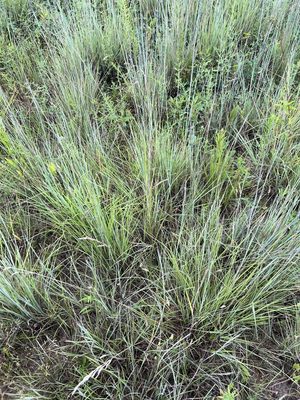
Little Bluestem
Schizachyrium scoparium
The backbone grass of the prairie: blue-green in summer, glowing copper and silver all winter.
- Full sun
- Dry–average
- 2–4 ft
- Fall color
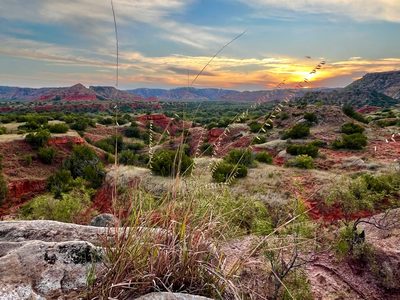
Sideoats Grama
Bouteloua curtipendula
A tidy mid-height grama hung with one-sided seed oats, and the state grass of Texas.
- Full sun
- Dry
- 1.5–2.5 ft
- Blooms Jun–Jul
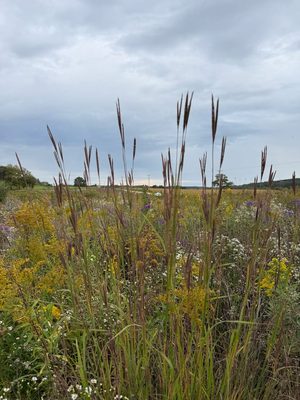
Big Bluestem
Andropogon gerardii
The towering 'turkey-foot' grass that once defined the tallgrass prairie, head-high by fall.
- Full sun
- Dry to wet
- 4–7 ft
- Fall color
Idaho Fescue
Festuca idahoensis
Fine blue-green tussocks that hold their color through a dry summer and ask for nothing at all.
- Full–part sun
- Dry
- 0.8–2 ft
- Evergreen