- Home
- Plant guide
- Sideoats Grama
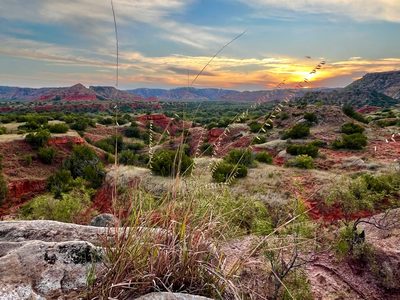
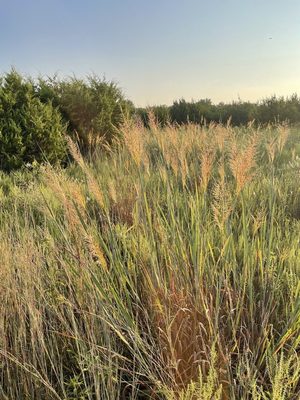
Clifton Ladd, C.W.B. (CC BY)
Sideoats Grama
Bouteloua curtipendula
A tidy mid-height grama hung with one-sided seed oats, and the state grass of Texas.
Native to: the Great Plains · the South-Central region · the desert Southwest · the Midwest · the Mountain West
Growing Sideoats Grama
Wonderfully drought-tough and well-behaved for smaller plantings. The little oat-like seeds dangle from one side of each stem.
Where it belongs
Sideoats grama is native across the Plains, Texas, Southwest, Midwest, and Mountain West, growing on dry prairie, limestone hills, rocky slopes, and caliche ground. It is the state grass of Texas.
Its value in a garden is scale. Big bluestem and indian grass are magnificent and reach seven feet, which rules them out for most yards. This tops out around two and a half feet, stays tidy, and still reads unmistakably as a prairie grass.
Growing it
Full sun, dry soil, in rocky ground, loam, sand, or clay, zones 4 to 9. Eighteen inches to two and a half feet.
Drought is not a problem for it; wet ground is. It grows on some of the hardest, thinnest, most alkaline soil on the continent and it will not tolerate a soggy bed.
It is a warm-season grass, greening up late and flowering in June and July, earlier than the tall prairie grasses.
It establishes faster than prairie dropseed and is far less fussy, which makes it a practical choice for a first native grass planting or for covering ground quickly on a dry slope.
Depending on the origin of the seed it may clump tightly or spread modestly by short rhizomes, so ask the nursery which you are getting if that matters to the design.
What it feeds
The identifying feature is the seed arrangement: small oat-like spikelets hang along one side of the flowering stem, all facing the same way, which looks deliberate and slightly odd. When it flowers, bright orange and purple anthers dangle from the spikelets, and it is worth looking closely in June.
It is a caterpillar host for several skippers, including the green skipper and dotted skipper, and for a number of moths.
Seed feeds sparrows, juncos, quail, and other ground-feeding birds. It is grazed by wildlife and livestock and is one of the more nutritious native range grasses.
Living with it
Deer do not damage it in a garden setting.
It combines well at the front of a dry planting with blanketflower, purple prairie clover, and blue grama, all of which want the same lean conditions.
The whole plant turns straw and orange-brown in fall and holds its shape through winter.
Cut back in early spring, or leave it entirely and let the new growth come up through the old.
Sources: USDA PLANTS Database (native range); Lady Bird Johnson Wildflower Center, University of Texas at Austin (species profile); USDA Natural Resources Conservation Service (plant guide, range and forage value).
It’s deer-resistant, drought-tolerant, and easy to grow.Where it grows
Sideoats Grama is native to the Great Plains. In the wild you’ll find it across Arizona · Arkansas · California · Colorado · Idaho · Illinois · Indiana · Iowa · Kansas · Kentucky and 20 more states. Always confirm it suits your specific county with your state native plant society before planting.
Regional Garden has written state guides covering Sideoats Grama in 30 of them so far.
Good for
Where to buy Sideoats Grama
Some links here are affiliate links and we may earn a small commission at no extra cost to you.
What a first-year Sideoats Grama planting needs, from a pH kit to mulch.
Companions & kin.
Natives that share Sideoats Grama’s range and conditions.
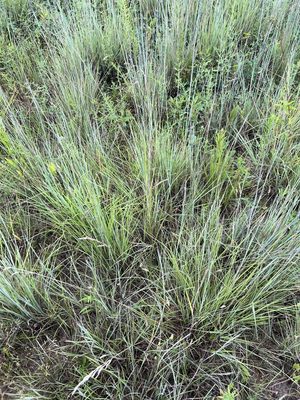
Little Bluestem
Schizachyrium scoparium
The backbone grass of the prairie: blue-green in summer, glowing copper and silver all winter.
- Full sun
- Dry–average
- 2–4 ft
- Fall color
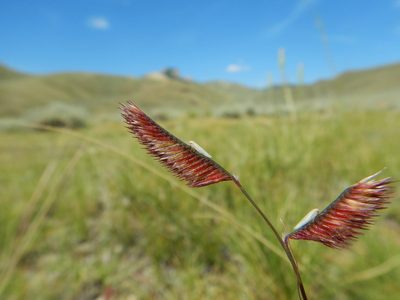
Blue Grama
Bouteloua gracilis
A fine, low prairie grass with quirky horizontal 'eyebrow' seed heads, and a great no-water lawn.
- Full sun
- Dry
- 8–20 in
- Blooms Jun–Aug
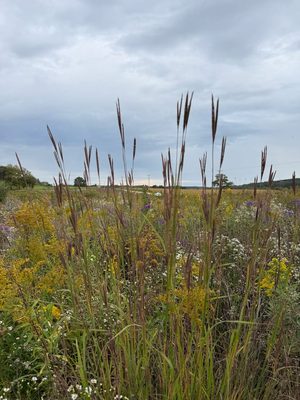
Big Bluestem
Andropogon gerardii
The towering 'turkey-foot' grass that once defined the tallgrass prairie, head-high by fall.
- Full sun
- Dry to wet
- 4–7 ft
- Fall color
Indian Grass
Sorghastrum nutans
Tall golden plumes catch the autumn light above a classic tallgrass-prairie planting.
- Full sun
- Dry–average
- 4–7 ft
- Fall color