- Home
- Plant guide
- Pasque Flower
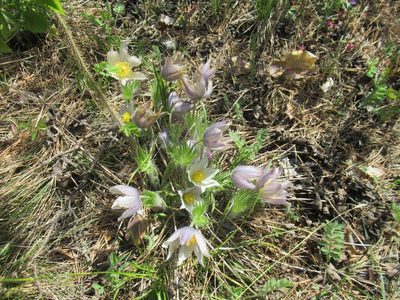
Pasque Flower
Pulsatilla patens
One of the very first prairie flowers, silky purple cups pushing up through cold early-spring ground.
Native to: the Great Plains · the Mountain West · the Midwest · the Great Basin
Growing Pasque Flower
Demands excellent drainage and full sun; perfect for a rock garden. Feathery seed heads follow the flowers, like a miniature prairie smoke.
Where it belongs
Pasque flower is native to the northern Plains, the upper Midwest, the Mountain West, and the Great Basin, growing on dry prairie, gravel hillsides, and rocky open slopes. It is the state flower of South Dakota and the provincial flower of Manitoba.
It flowers earlier than nearly anything else on the open prairie, opening in March or early April, sometimes while snow is still on the ground nearby. The name refers to Easter, which is roughly when it appears.
The whole plant is covered in fine silver hairs, which is not decoration. The hairs trap a layer of still air and hold warmth against the plant while the air around it is still near freezing.
Growing it
Full sun, dry soil, in rocky ground, sand, or lean loam, zones 3 to 7. Six to twelve inches.
Drainage is the requirement and it is absolute. This is a rock garden plant, a gravel bed plant, a top-of-the-slope plant. In heavy soil that stays wet in winter it rots.
Cool climates suit it. Like prairie smoke, it does poorly in hot humid summers.
It has a deep taproot and resents disturbance, so plant it small and leave it alone permanently. It does not divide well.
From seed it needs cold stratification and takes two or three years to flower. Seed loses viability fast, so sow fresh.
What it feeds
Being first is the entire wildlife contribution, and it is a substantial one.
The flower opens on the first warm days, when queen bumblebees and early mining bees have just emerged from overwintering and have nothing to eat. The cup shape holds heat, and insects sit in it in weather too cold to fly efficiently.
It offers pollen as well as nectar, which matters because a founding queen needs protein to start brood.
After bloom it produces feathery seed plumes like a smaller prairie smoke, and the two together give a dry sunny bed a long season of texture.
Living with it
Deer avoid it, and so should you in one respect: the fresh plant contains irritant compounds that can blister skin. Wear gloves when handling it, and do not let it be eaten.
The foliage expands after flowering and stays through summer, then goes dormant.
No cutting back, no feeding, no watering after establishment. The mistakes with this plant are all things people do to it rather than things they fail to do.
Sources: USDA PLANTS Database (native range and nomenclature); Lady Bird Johnson Wildflower Center, University of Texas at Austin (species profile); Xerces Society (earliest season forage for emerging bumblebee queens).
It’s deer-resistant, drought-tolerant, and showy.Where it grows
Pasque Flower is native to the Great Plains. In the wild you’ll find it across Arizona · Arkansas · Colorado · Idaho · Illinois · Indiana · Iowa · Kansas · Kentucky · Michigan and 20 more states. Always confirm it suits your specific county with your state native plant society before planting.
Regional Garden has written state guides covering Pasque Flower in 30 of them so far.
Good for
Where to buy Pasque Flower
Some links here are affiliate links and we may earn a small commission at no extra cost to you.
What a first-year Pasque Flower planting needs, from a pH kit to mulch.
Companions & kin.
Natives that share Pasque Flower’s range and conditions.

Wild Bergamot
Monarda fistulosa
Ragged lavender crowns that hum with bees, hummingbirds, and clearwing moths; foliage smells of oregano.
- Full–part sun
- Dry–average
- 2–4 ft
- Blooms Jun–Aug
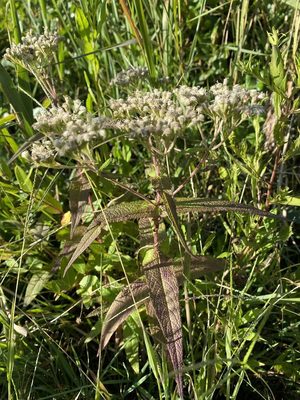
Common Boneset
Eupatorium perfoliatum
Frothy white heads alive with small native bees and wasps, for ground that stays damp.
- Full–part sun
- Average–wet
- 3–5 ft
- Blooms Aug–Sep

Common Yarrow
Achillea millefolium
A near-continental native with flat flower heads that feed tiny beneficial insects, tough as a weed.
- Full sun
- Dry–average
- 1.5–3 ft
- Blooms May–Aug
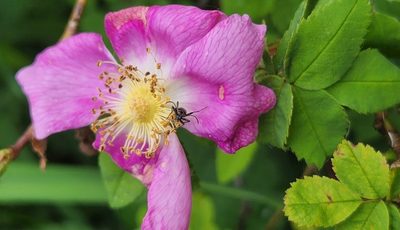
Nootka Rose
Rosa nutkana
One ring of pink petals, a real rose scent, and hips that stay scarlet on bare canes all winter.
- Full–part sun
- Average–wet
- 3–9 ft
- Blooms May–Jun