- Home
- Plant guide
- Anise Hyssop
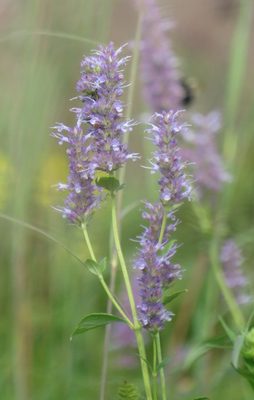
Marilynn Miller (CC BY)
Anise Hyssop
Agastache foeniculum
Months of lavender spikes over licorice-scented foliage, mobbed by bees from dawn to dusk.
Native to: the Midwest · the Great Plains · the Mountain West · the Northeast
Growing Anise Hyssop
Blooms for an exceptionally long season and self-sows where happy. Sharp drainage is the secret to longevity.
Where it belongs
Anise hyssop is native to the upper Midwest, the northern Plains, parts of the Mountain West, and the northern edge of the Northeast, growing in dry prairie, open woods, and along the margins of fields.
Its range is narrower than its popularity. It is planted far outside where it grows wild, which is a legitimate garden choice as long as you know you are making it. If your state's native list does not include it, the local answer for the same job is usually wild bergamot.
Growing it
Full sun to part sun, dry to medium soil, in loam, sand, or rocky ground, zones 4 to 9. Two to four feet.
Drainage decides how long it lives. In sharp soil it can persist for years; in heavy wet ground it often dies over its second or third winter. This is a plant to put on a slope, in a raised bed, or in gravelly ground rather than in improved soil.
The bloom season is the real argument for it. It opens in June and keeps going into September, which very few perennials do, and deadheading the first flush extends it further.
It self-sows freely where it is happy, sometimes more than you want. Seedlings are easy to recognize by smell and easy to pull.
What it feeds
Bees of every size work it from first light to evening, and a mature plant in July is loud. Bumblebees, honey bees, small sweat bees, and leafcutter bees all use it, and the long bloom period means it feeds them across most of the season rather than for two weeks.
Hummingbirds visit the spikes. Butterflies take nectar. In fall, goldfinches work the seed heads.
Beekeepers plant it deliberately. It is one of the higher-yielding nectar plants in the northern states.
Living with it
Deer avoid it. Crush a leaf and it smells distinctly of licorice, which is where the name comes from, and that scent is why it is left alone.
The leaves and flowers are used as a tea and as a culinary flavoring, and it has a long history of that use. This is one of the few plants on this site with a kitchen application, though the reason to grow it is still the insects.
Leave the seed heads standing through winter for birds and for the look of them in frost. Cut back in spring.
Sources: USDA PLANTS Database (native range); Lady Bird Johnson Wildflower Center, University of Texas at Austin (species profile); Xerces Society (season long forage value).
It’s deer-resistant, drought-tolerant, fragrant, and long-blooming.Where it grows
Anise Hyssop is native to the Midwest. In the wild you’ll find it across Arizona · Arkansas · Colorado · Connecticut · Idaho · Illinois · Indiana · Iowa · Kansas · Kentucky and 24 more states. Always confirm it suits your specific county with your state native plant society before planting.
Regional Garden has written state guides covering Anise Hyssop in 34 of them so far.
Good for
Where to buy Anise Hyssop
Some links here are affiliate links and we may earn a small commission at no extra cost to you.
What a first-year Anise Hyssop planting needs, from a pH kit to mulch.
Companions & kin.
Natives that share Anise Hyssop’s range and conditions.
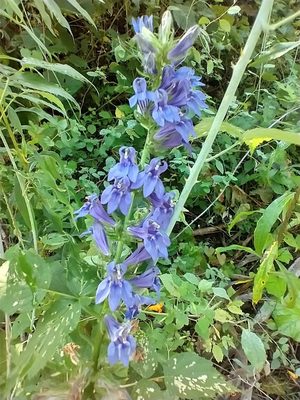
Great Blue Lobelia
Lobelia siphilitica
Spikes of true blue for late summer shade and damp ground, worked hard by bumblebees.
- Full–part sun
- Average–wet
- 2–3 ft
- Blooms Aug–Sep
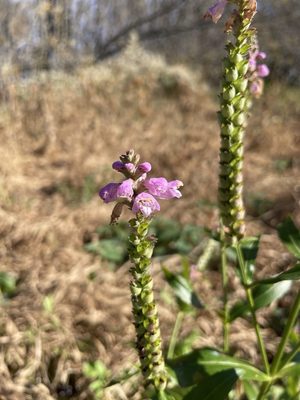
Obedient Plant
Physostegia virginiana
Snapdragon-like pink spikes for late summer, beloved by bumblebees and hummingbirds.
- Full–part sun
- Average–wet
- 2–4 ft
- Blooms Aug–Sep
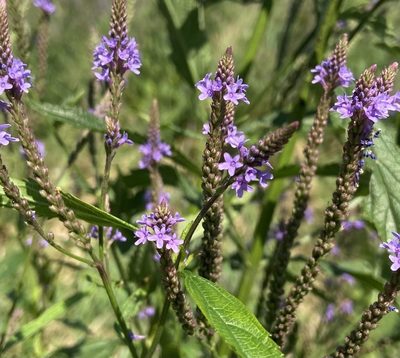
Blue Vervain
Verbena hastata
Candelabras of tiny violet flowers for wet ground, working for small native bees all summer.
- Full–part sun
- Average–wet
- 3–5 ft
- Blooms Jul–Sep
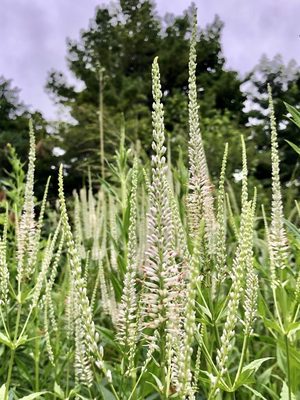
Culver's Root
Veronicastrum virginicum
Elegant white candelabra spires that bring vertical structure and a haze of bees to midsummer.
- Full–part sun
- Average–wet
- 3–5 ft
- Blooms Jun–Aug