- Home
- Plant guide
- Crossvine
Michael J. Papay (CC BY)
Crossvine
Bignonia capreolata
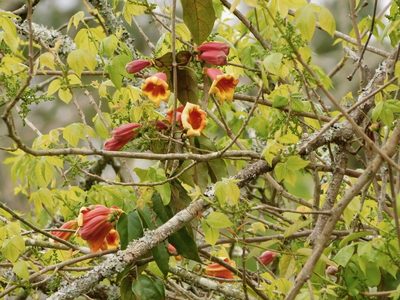
A vigorous, semi-evergreen climber that smothers a fence in orange-red trumpets each spring.
Native to: the Southeast · the South-Central region · the Mid-Atlantic
Growing Crossvine
One of the earliest big nectar sources for returning hummingbirds in the South. Clings by tendrils, so it climbs masonry and wood without help.
Where it belongs
Crossvine is native to the Southeast, Texas, and the southern Mid-Atlantic, growing in bottomland forest, along stream banks, and up the trunks of trees in moist woods, where it climbs high into the canopy.
The name comes from a cross-shaped pattern visible in a cut stem cross-section, which is a real and checkable field mark.
Its role in a garden is scale and speed. It is a large vigorous vine that covers a lot of vertical surface quickly, which is either exactly what you want or considerably more than you bargained for.
Growing it
Full sun to part sun, medium to dry soil, in loam or clay, zones 6 to 9. Twenty-five to fifty feet.
Adaptable to most soils, tolerant of drought once established, and it flowers most heavily in full sun.
It climbs by tendrils tipped with adhesive discs, so it attaches to brick, stone, wood, and stucco without any support structure. That is convenient and it is also the thing to think about first: it can get into siding, gutters, and under shingles, and removing it from a painted surface takes the paint. Give it a sturdy fence, an arbor, a masonry wall, or a dead tree rather than the side of a house.
It is semi-evergreen, holding leaves through mild winters and often turning purple-bronze in cold.
Prune right after flowering. It flowers on old wood, so a late-winter cut removes the spring display.
What it feeds
The flowers are large trumpets, orange-red outside and yellow within, held in clusters along the stems in April and May, with a light scent sometimes compared to mocha.
Hummingbirds are the primary visitors and the timing is what matters: ruby-throats crossing the Gulf and arriving on the southern coast in early spring encounter very little in flower, and this is one of the substantial early sources on that route. It is a genuinely large nectar volume, in reach at the moment birds most need it.
Large bees, particularly carpenter bees, work the trumpets too.
Long flat seed pods follow. The dense semi-evergreen cover is used for nesting.
Living with it
Deer generally leave it alone.
It suckers from the roots and spreads along the ground where it cannot climb, which is worth an annual pass with the pruners at the base.
Do not confuse it with trumpet creeper, a related native vine with similar orange flowers that blooms in summer and is considerably more aggressive. Crossvine is the spring one and the better-behaved of the two.
Sources: USDA PLANTS Database (native range); Lady Bird Johnson Wildflower Center, University of Texas at Austin (species profile); Cornell Lab of Ornithology (spring hummingbird migration and Gulf coast arrival); University of Florida IFAS Extension (culture and climbing habit).
It’s showy, evergreen, drought-tolerant, and fast-growing.Where it grows
Crossvine is native to the Southeast. In the wild you’ll find it across Alabama · Arkansas · Delaware · Florida · Georgia · Kentucky · Louisiana · Maryland · Mississippi · Missouri and 11 more states. Always confirm it suits your specific county with your state native plant society before planting.
Regional Garden has written state guides covering Crossvine in 21 of them so far.
Good for
Where to buy Crossvine
Some links here are affiliate links and we may earn a small commission at no extra cost to you.
What a first-year Crossvine planting needs, from a pH kit to mulch.
Companions & kin.
Natives that share Crossvine’s range and conditions.
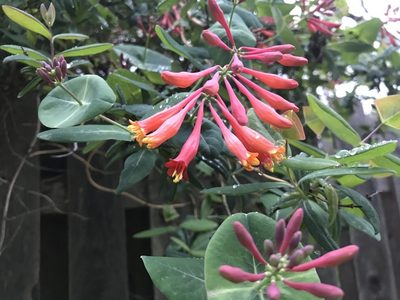
Trumpet Honeysuckle
Lonicera sempervirens
A well-mannered native vine that pours out coral-red hummingbird trumpets from spring to frost.
- Full–part sun
- Dry–average
- 8–15 ft
- Blooms Apr–Sep
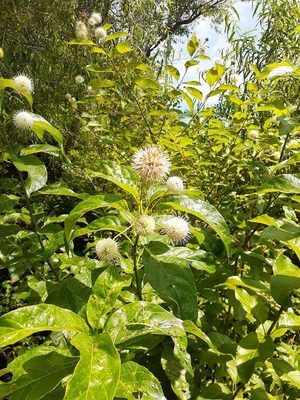
Buttonbush
Cephalanthus occidentalis
Spherical white 'pincushion' flowers over standing water, swarmed by butterflies and bees.
- Full–part sun
- Average–wet
- 5–10 ft
- Blooms Jun–Aug
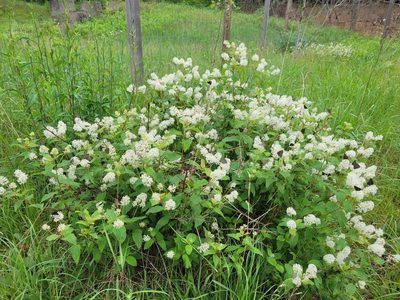
New Jersey Tea
Ceanothus americanus
A compact, drought-proof shrub frothing with white flowers that pollinators and hummingbirds adore.
- Full–part sun
- Dry
- 2–3.5 ft
- Blooms May–Jul
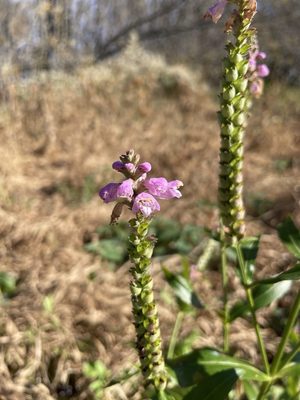
Obedient Plant
Physostegia virginiana
Snapdragon-like pink spikes for late summer, beloved by bumblebees and hummingbirds.
- Full–part sun
- Average–wet
- 2–4 ft
- Blooms Aug–Sep