- Home
- Plant guide
- Chocolate Flower
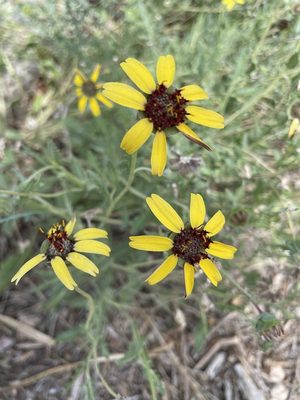
Rick Robb (CC BY)
Chocolate Flower
Berlandiera lyrata
Yellow daisies that genuinely smell of chocolate each morning, and bloom all summer in heat.
Native to: the desert Southwest · the Great Plains · the South-Central region
Growing Chocolate Flower
The cocoa fragrance is strongest in the cool of early morning. Thrives on neglect in hot, dry, gravelly ground.
Where it belongs
Chocolate flower is native to the Southwest, the southern Plains, and Texas, growing on limestone hills, gravel flats, roadsides, and dry grassland.
The name is literal. Stand next to a flowering plant early on a summer morning and the scent of cocoa is unmistakable, strong enough that people look around for a source. It fades as the day warms, which is why afternoon visitors often miss it entirely. Site it near a door, a walk, or a morning coffee spot, or the main feature of the plant goes unnoticed.
Growing it
Full sun, dry soil, in rocky ground, sand, or lean loam, zones 4 to 10. One to two feet.
Sharp drainage. It grows on caliche and limestone gravel naturally and rots in heavy wet soil.
The hardiness range is unusually wide for a southwestern plant, running from zone 4 to zone 10, so it works well beyond the desert as long as the drainage is right.
Bloom runs from May into September and keeps going through the hottest weeks, which is when most gardens stall. It reseeds gently into gravel.
It has a taproot and does not transplant well once established. Set it out small and leave it.
The flower has another quiet feature: after the yellow rays drop, the green bracts remain in a neat circular cup that holds its shape, so the seed heads look like small green rosettes scattered across the plant.
What it feeds
Open flat daisies with accessible centers, which is the shape that serves the greatest breadth of insects.
Native bees are the main visitors, including small solitary species. Butterflies and skippers take nectar. Because it flowers continuously through the heat, it provides forage during the stretch when many drought-adapted plants have shut down and are waiting for late-summer rain.
Small birds take the seed.
Living with it
Deer generally leave it alone, and it is drought tolerant to the point of needing no supplemental water once established.
It combines well with blanketflower, blue grama, and sideoats grama, which want the same lean dry ground and flower on a similar schedule.
Shear it back by a third if it gets leggy in midsummer. Leave the seed heads in fall, and cut back in early spring.
Sources: USDA PLANTS Database (native range); Lady Bird Johnson Wildflower Center, University of Texas at Austin (species profile); Plant Select and Denver Botanic Gardens (regional garden performance across a wide hardiness range).
It’s deer-resistant, drought-tolerant, fragrant, and long-blooming.Where it grows
Chocolate Flower is native to the desert Southwest. In the wild you’ll find it across Arizona · Arkansas · California · Colorado · Illinois · Iowa · Kansas · Louisiana · Minnesota · Missouri and 10 more states. Always confirm it suits your specific county with your state native plant society before planting.
Regional Garden has written state guides covering Chocolate Flower in 20 of them so far.
Good for
Where to buy Chocolate Flower
Some links here are affiliate links and we may earn a small commission at no extra cost to you.
What a first-year Chocolate Flower planting needs, from a pH kit to mulch.
Companions & kin.
Natives that share Chocolate Flower’s range and conditions.
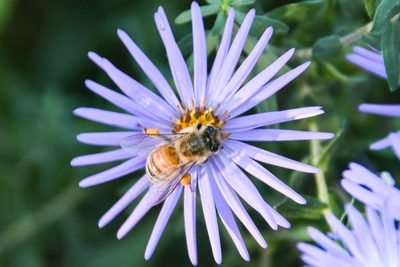
Aromatic Aster
Symphyotrichum oblongifolium
A drought-proof, mounding aster that closes the pollinator season with sheets of blue.
- Full sun
- Dry
- 1.5–2.5 ft
- Blooms Sep–Nov
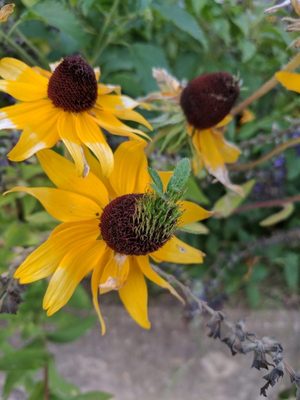
Black-Eyed Susan
Rudbeckia hirta
A cheerful, unkillable starter native that blooms its first year and seeds itself politely around.
- Full–part sun
- Dry–average
- 1.5–3 ft
- Blooms Jun–Sep
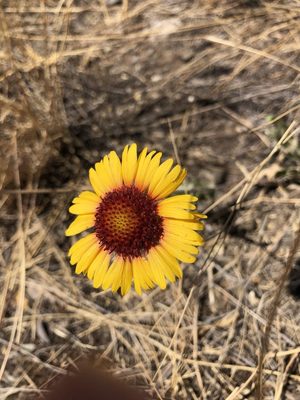
Blanketflower
Gaillardia aristata
Fiery red-and-gold wheels that bloom nonstop all summer on hot, dry, sandy ground.
- Full sun
- Dry
- 1–2.5 ft
- Blooms Jun–Sep
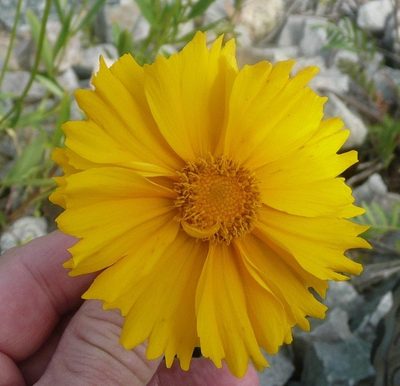
Lanceleaf Coreopsis
Coreopsis lanceolata
Sunny gold daisies for weeks in early summer on the leanest, driest soil you can offer.
- Full sun
- Dry–average
- 1.5–2 ft
- Blooms May–Jul