- Home
- Plant guide
- Golden Alexanders
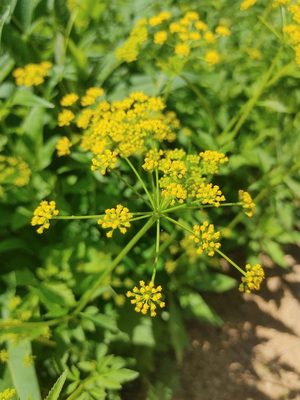
Golden Alexanders
Zizia aurea
Early flat gold heads that feed the first small bees and host the black swallowtail.
Native to: the Northeast · the Mid-Atlantic · the Southeast · the Midwest · the Great Plains
Growing Golden Alexanders
One of the earliest natives to bloom, filling the gap before summer perennials start. Tolerates part shade and reseeds gently in moist soil.
Where it belongs
Golden alexanders is native across the East, Midwest, and eastern Plains, growing in moist prairies, open woods, thickets, and along stream banks. It is one of the few natives comfortable in either sun or dappled shade, which makes it useful at the seam between a lawn and a wooded edge.
Its value is almost entirely about timing. It opens in late April and May, well before the summer perennials, when the insects that emerged in early spring have very little to work with.
Growing it
Full sun to part sun, medium to wet soil, in loam or clay, zones 3 to 8. Eighteen inches to two and a half feet.
It is undemanding in ordinary garden soil that does not dry out hard, and it takes clay. In full shade it flowers thinly.
It reseeds gently, and volunteers are easy to move while small, which is a practical way to build a drift over a few years.
After flowering it sets green seed heads that darken to purple-bronze, and the foliage stays clean and upright into fall rather than collapsing. That is unusual among early bloomers and worth knowing when you place it.
What it feeds
Two separate jobs.
The flowers are tiny, shallow, and packed into flat umbels, which is the architecture that short-tongued insects can actually use. Small native bees, mining bees, flower flies, soldier beetles, and parasitoid wasps all work it, and in late April they have few alternatives. Several specialist bees are tied to this genus and its relatives.
The foliage hosts black swallowtail caterpillars. Most gardeners feed that butterfly with parsley, dill, or fennel, all of which are imported herbs; this is the native plant the insect used before those arrived. The caterpillars are banded green, black, and yellow and are conspicuous enough that people mistake them for a problem. They are the reason to grow it.
Living with it
Deer generally avoid it.
It is in the carrot family, which includes both edible plants and lethally poisonous ones such as poison hemlock and water hemlock. Do not eat anything from this family on a field identification, and do not encourage a child to either. Grow it as habitat.
Leave the stems through winter and cut back in spring.
Sources: USDA PLANTS Database (native range); Lady Bird Johnson Wildflower Center, University of Texas at Austin (species profile); Xerces Society (early season forage and specialist bees); Illinois Natural History Survey (black swallowtail host plants).
It’s deer-resistant, easy to grow, and showy.Where it grows
Golden Alexanders is native to the Northeast. In the wild you’ll find it across Alabama · Arkansas · Colorado · Connecticut · Delaware · Florida · Georgia · Illinois · Indiana · Iowa and 32 more states. Always confirm it suits your specific county with your state native plant society before planting.
Regional Garden has written state guides covering Golden Alexanders in 42 of them so far.
Good for
Where to buy Golden Alexanders
Some links here are affiliate links and we may earn a small commission at no extra cost to you.
What a first-year Golden Alexanders planting needs, from a pH kit to mulch.
Companions & kin.
Natives that share Golden Alexanders’s range and conditions.
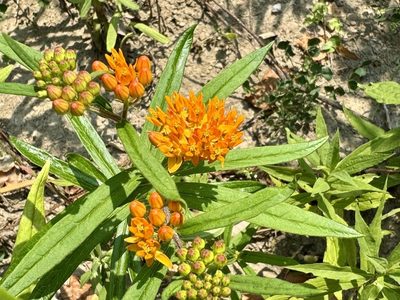
Butterfly Weed
Asclepias tuberosa
A monarch host plant and the brightest orange in the native palette, thriving in lean, dry soil.
- Full sun
- Dry
- 1.5–2.5 ft
- Blooms Jun–Aug
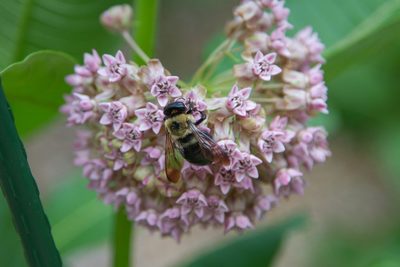
Common Milkweed
Asclepias syriaca
The classic monarch nursery, with honey-scented summer flowers that perfume an entire meadow.
- Full–part sun
- Dry–average
- 3–5 ft
- Blooms Jun–Jul

Common Yarrow
Achillea millefolium
A near-continental native with flat flower heads that feed tiny beneficial insects, tough as a weed.
- Full sun
- Dry–average
- 1.5–3 ft
- Blooms May–Aug
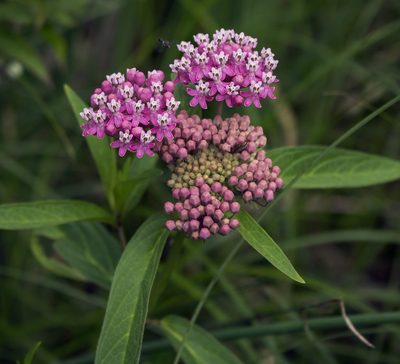
Swamp Milkweed
Asclepias incarnata
A well-behaved, clump-forming milkweed for wet ground: a monarch host that also looks at home in a border.
- Full–part sun
- Average–wet
- 3–4 ft
- Blooms Jul–Aug