- Home
- Plant guide
- Douglas Aster
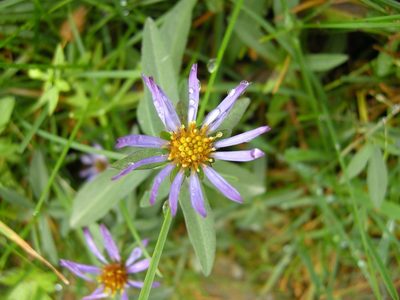
Douglas Aster
Symphyotrichum subspicatum
The Pacific Northwest's late-season aster, feeding bees into the first cool, wet days of fall.
Native to: the Pacific Northwest
Growing Douglas Aster
Adaptable to wet or average soil and a key fall nectar source west of the Cascades. Spreads modestly to fill a border.
Where it belongs
Douglas aster is native to the Pacific Northwest, west of the Cascades and along the coast, growing in wet meadows, on stream banks, in ditches, and at the edges of coastal marshes and prairies.
It matters regionally in a way that is easy to miss from outside. Most published native plant advice is written for the East and the Midwest, where New England aster is the standard fall species. West of the Cascades that plant is not native, and this is the aster that belongs there.
Growing it
Full sun to part sun, medium to wet soil, in loam or clay, zones 4 to 8. Two to four feet.
It handles the region's conditions directly: wet winters, dry summers, and heavy soil. It tolerates both average garden ground and genuinely wet spots, which makes it one of the reliable choices for a rain garden west of the mountains.
It spreads modestly by rhizome and fills a border over a few seasons without becoming a problem. Pull the outer edge in spring if it goes further than you want.
In rich soil it can grow tall and lean. Cutting the stems back by half in early June produces a shorter, denser plant and slightly later flowers.
What it feeds
Bloom runs from August into October, and in the Pacific Northwest that period carries particular weight. The dry summer ends and the rains start, and much of what flowered earlier is finished.
Bumblebees are the main visitors, and this is the point in the year when new queens are feeding heavily before overwintering alone. Whether they go into winter well fed determines whether there are colonies the following spring.
Native solitary bees, hoverflies, and butterflies work it as well, including late-season painted ladies and woodland skippers. Small birds take the seed through the winter.
Living with it
Deer will browse it where pressure is high.
Buy it from a nursery that specializes in Northwest natives. Aster taxonomy is tangled, common names are applied loosely, and eastern species are widely sold in the region under generic labels.
Leave the stems standing over winter for the seed and for the insects sheltering in them, and cut back in spring.
Sources: USDA PLANTS Database (native range and nomenclature); Washington Native Plant Society and Oregon State University Extension (regional species selection); Xerces Society (late-season bumblebee forage and overwintering queens).
It’s easy to grow, and showy.Where it grows
Douglas Aster is native to the Pacific Northwest. In the wild you’ll find it across California · Idaho · Montana · Oregon · Washington. Always confirm it suits your specific county with your state native plant society before planting.
Regional Garden has written state guides covering Douglas Aster in 5 of them so far.
Good for
Where to buy Douglas Aster
Some links here are affiliate links and we may earn a small commission at no extra cost to you.
What a first-year Douglas Aster planting needs, from a pH kit to mulch.
Companions & kin.
Natives that share Douglas Aster’s range and conditions.
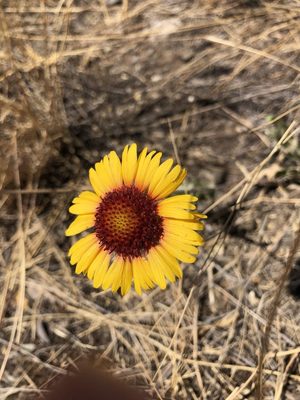
Blanketflower
Gaillardia aristata
Fiery red-and-gold wheels that bloom nonstop all summer on hot, dry, sandy ground.
- Full sun
- Dry
- 1–2.5 ft
- Blooms Jun–Sep
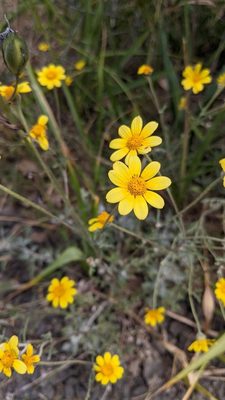
Oregon Sunshine
Eriophyllum lanatum
Silver-woolly foliage under golden daisies, on a plant that treats a hot dry summer as normal weather.
- Full sun
- Dry
- 0.7–2 ft
- Blooms May–Jul

Blue Elderberry
Sambucus cerulea
Fast, big, and covered in flat cream flower heads, then dusty blue fruit that draws every fruit-eating bird in the county.
- Full–part sun
- Average–wet
- 8–20 ft
- Blooms Jun–Jul
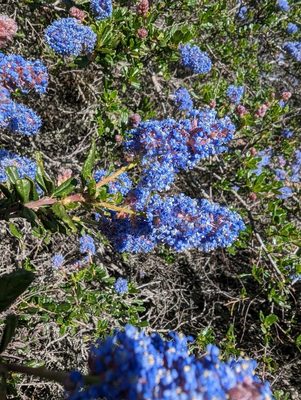
California Lilac
Ceanothus thyrsiflorus
Sheets of true-blue spring flowers on an evergreen shrub that hums with bees on the West Coast.
- Full sun
- Dry
- 6–20 ft
- Blooms Mar–May