- Home
- Plant guide
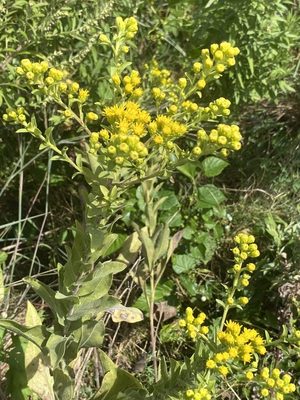
- Showy Goldenrod
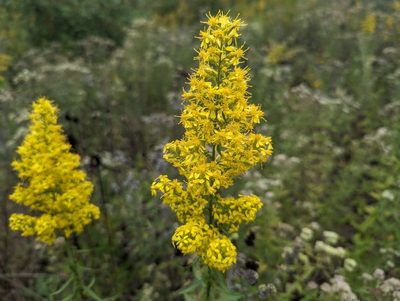
Ryan Sorrells (CC BY)
Showy Goldenrod
Solidago speciosa
Upright golden candles that anchor the fall garden, and no, goldenrod doesn't cause hay fever.
Native to: the Northeast · the Mid-Atlantic · the Southeast · the Midwest · the Great Plains
Growing Showy Goldenrod
A clump-former, not a runner, so it behaves in a border. Supports an enormous range of native bees and is a top fall nectar source.
Where it belongs
Showy goldenrod grows across the Northeast, Mid-Atlantic, Southeast, Midwest, and Plains, in dry prairies, open oak woods, sand barrens, and along railroad banks. It wants sun and drainage more than it wants good soil.
Start with the hay fever question, because it is the reason this genus is missing from most yards. Goldenrod pollen is heavy and sticky, built to ride on an insect. It does not travel on the wind, and it is not what makes people sneeze in September. Ragweed blooms at the same time, produces clouds of light airborne pollen, and has small green flowers nobody notices. Goldenrod has been taking the blame for its neighbor for a century.
Growing it
Full sun to part sun, dry to medium soil, in loam, sand, or rocky ground, zones 3 to 8. Two to four feet.
The other reason people avoid goldenrods is that some species run aggressively. Canada goldenrod and tall goldenrod both do, which is why they dominate abandoned fields. This one does not. It forms a clump from a central crown and stays where you put it, which makes it usable in a planted bed rather than only in a meadow.
The flower shape is distinct as well. Instead of the arching one-sided sprays most people picture, it makes a dense upright plume, closer to a candle. That vertical form is what earns it a place in a border design.
What it feeds
Goldenrods support one of the largest insect communities of any plant genus in North America, and September is when that matters most.
The nectar and pollen feed migrating monarchs, bumblebee queens preparing to overwinter, and a long list of native bees, including specialists that collect from goldenrod and almost nothing else. Soldier beetles, wasps, and flower flies work it too. Later, small birds take the seed.
Living with it
It is deer resistant and drought tolerant once its roots are down, and needs nothing from you in an ordinary year.
In rich soil it can grow tall enough to lean. Lean ground keeps it upright, which is another argument for the hard, sunny spot.
Leave the stems and seed heads through winter for the birds and for the insects sheltering in them. Cut back in spring.
Sources: USDA PLANTS Database (native range); Lady Bird Johnson Wildflower Center, University of Texas at Austin (species profile); Xerces Society (specialist bees and fall nectar); American Academy of Allergy, Asthma and Immunology (ragweed as the seasonal airborne allergen).
It’s deer-resistant, drought-tolerant, and showy.Where it grows
Showy Goldenrod is native to the Northeast. In the wild you’ll find it across Alabama · Arkansas · Colorado · Connecticut · Delaware · Florida · Georgia · Illinois · Indiana · Iowa and 32 more states. Always confirm it suits your specific county with your state native plant society before planting.
Regional Garden has written state guides covering Showy Goldenrod in 42 of them so far.
Good for
Where to buy Showy Goldenrod
Some links here are affiliate links and we may earn a small commission at no extra cost to you.
What a first-year Showy Goldenrod planting needs, from a pH kit to mulch.
Companions & kin.
Natives that share Showy Goldenrod’s range and conditions.
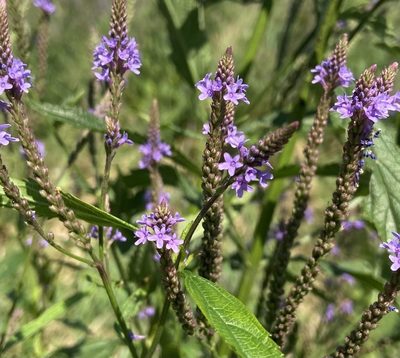
Blue Vervain
Verbena hastata
Candelabras of tiny violet flowers for wet ground, working for small native bees all summer.
- Full–part sun
- Average–wet
- 3–5 ft
- Blooms Jul–Sep
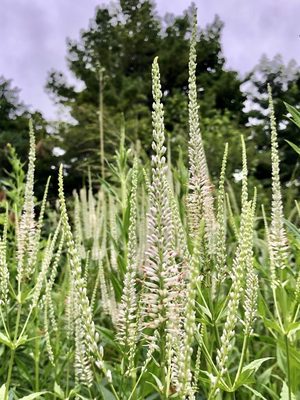
Culver's Root
Veronicastrum virginicum
Elegant white candelabra spires that bring vertical structure and a haze of bees to midsummer.
- Full–part sun
- Average–wet
- 3–5 ft
- Blooms Jun–Aug
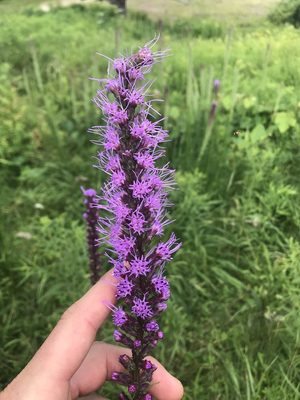
Dense Blazing Star
Liatris spicata
Vertical wands of magenta that open top-down and pull in every swallowtail in the neighborhood.
- Full sun
- Average–wet
- 2–4 ft
- Blooms Jul–Aug
Stiff Goldenrod
Solidago rigida
A prairie goldenrod with flat-topped flower heads that double as a butterfly landing pad.
- Full sun
- Dry–average
- 3–5 ft
- Blooms Aug–Oct