- Home
- Plant guide
- Compass Plant
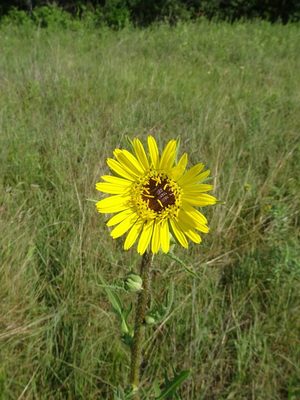
Thomas Koffel (CC BY)
Compass Plant
Silphium laciniatum
A signature tallgrass-prairie plant with a taproot that can plunge fifteen feet down.
Native to: the Midwest · the Great Plains · the South-Central region
Growing Compass Plant
Slow to establish while it builds that root, then effectively permanent and drought-proof. The deeply cut basal leaves orient north-south, giving the plant its name.
Where it belongs
Compass plant is a signature species of the tallgrass prairie, native through the Midwest, the Plains, and north Texas. It grows in deep-soil prairie and on loess hills, and its presence in a remnant is one of the signs that the ground has never been plowed.
The name is earned. The large basal leaves orient their flat faces east and west, so the edges point north and south, which reduces the heat load at midday. Early travelers used them for direction. Aldo Leopold wrote about the species as a measure of what had been lost from the prairie, and it remains a plant with that weight attached to it.
Growing it
Full sun, dry to medium soil, in loam or clay, zones 3 to 9. The flowering stalk reaches five to nine feet.
Everything about this plant is slow. It spends its first several years building the taproot, which can descend fifteen feet, and it may not flower until year three or later. Gardeners who expect a display in the first summer are disappointed by it.
The reward is permanence. Once that root is down the plant is effectively drought-proof and can live for decades, longer than most of what surrounds it. It also means it cannot be moved. Plant it where it will stay.
Start from fresh seed with cold-moist stratification, or set out young plants in deep pots. Nursery stock in a shallow pot is usually a poor bet.
What it feeds
The yellow flower heads open in July and August along the upper stalk and feed bees heavily, especially large bees able to work a sunflower-type head.
Goldfinches take the seed and use the fibers in nests. In the wild the resin that seeps from the upper stem was chewed as a gum, and it still gums up your hands if you cut a stalk.
A stand in seed also holds sparrows and juncos through fall.
Living with it
Deer generally leave it alone once the foliage toughens.
There is no maintenance to speak of. It does not need dividing, cannot be divided, and does not need fertilizing. The rosette of big leaves stays handsome all season on its own.
Leave the stalk standing through winter. It holds its structure in snow, and cut back in early spring.
Sources: USDA PLANTS Database (native range); Lady Bird Johnson Wildflower Center, University of Texas at Austin (species profile and root depth); The Prairie Ecologist and prairie restoration literature (remnant indicator species).
It’s deer-resistant, and drought-tolerant.Where it grows
Compass Plant is native to the Midwest. In the wild you’ll find it across Arkansas · Colorado · Illinois · Indiana · Iowa · Kansas · Kentucky · Louisiana · Michigan · Minnesota and 15 more states. Always confirm it suits your specific county with your state native plant society before planting.
Regional Garden has written state guides covering Compass Plant in 25 of them so far.
Good for
Where to buy Compass Plant
Some links here are affiliate links and we may earn a small commission at no extra cost to you.
What a first-year Compass Plant planting needs, from a pH kit to mulch.
Companions & kin.
Natives that share Compass Plant’s range and conditions.
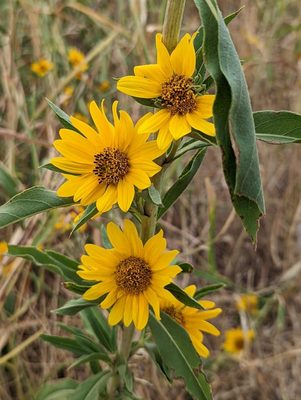
Maximilian Sunflower
Helianthus maximiliani
A towering fall sunflower whose stems are studded top to bottom with gold, then thick with seed for birds.
- Full sun
- Dry–average
- 5–8 ft
- Blooms Aug–Oct
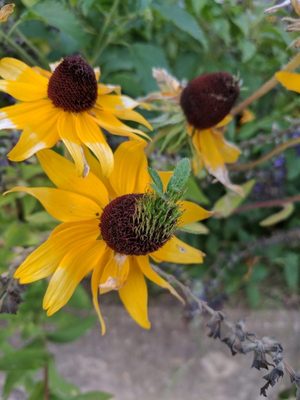
Black-Eyed Susan
Rudbeckia hirta
A cheerful, unkillable starter native that blooms its first year and seeds itself politely around.
- Full–part sun
- Dry–average
- 1.5–3 ft
- Blooms Jun–Sep
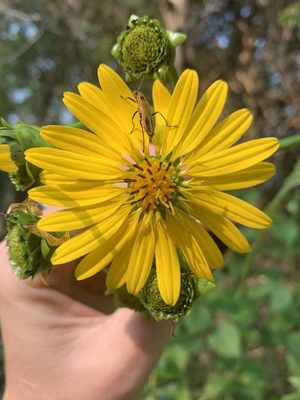
Cup Plant
Silphium perfoliatum
A prairie giant whose paired leaves hold rainwater for birds; goldfinches mob the seeds.
- Full–part sun
- Average–wet
- 5–8 ft
- Blooms Jul–Sep
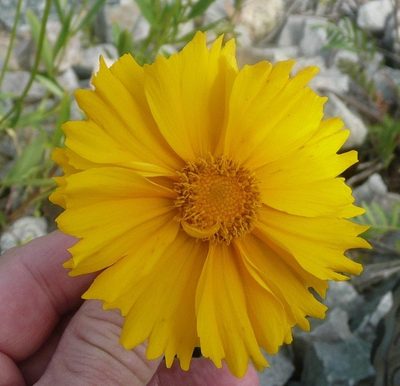
Lanceleaf Coreopsis
Coreopsis lanceolata
Sunny gold daisies for weeks in early summer on the leanest, driest soil you can offer.
- Full sun
- Dry–average
- 1.5–2 ft
- Blooms May–Jul