- Home
- Plant guide
- Maximilian Sunflower
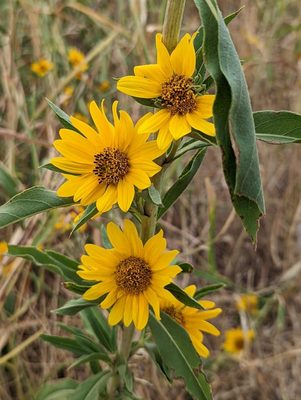
My-Lan Le (CC BY)
Maximilian Sunflower
Helianthus maximiliani
A towering fall sunflower whose stems are studded top to bottom with gold, then thick with seed for birds.
Native to: the Great Plains · the South-Central region · the Midwest
Growing Maximilian Sunflower
Spreads by rhizome into a tall colony: superb as a seasonal screen, too vigorous for a small bed. Goldfinches and quail strip the seed.
Where it belongs
Maximilian sunflower is native to the Plains, Texas, and the western Midwest, growing in prairie, along roadsides, in old fields, and on the edges of grassland. It is named for a nineteenth-century European prince who traveled the upper Missouri River.
It differs from the annual sunflower most people picture. That plant has one huge head on one stem and dies at the end of the year. This is a perennial that lines dozens of medium heads along the upper two thirds of each arching stem, so the effect is a wall of gold rather than a single face.
Growing it
Full sun, dry to medium soil, in loam, clay, or sand, zones 3 to 9. Five to eight feet.
It grows fast and it spreads by rhizome into a colony, and that is the fact to decide about before planting. In a small bed it will take over within a few years. Along a fence line, at the back of a large planting, or as a seasonal screen, the same behavior is the point: it makes a solid eight-foot wall of foliage by August that disappears entirely in winter.
Lean soil and full sun keep it upright. In rich ground the stems get heavy and lean under their own seed.
Cutting the stems back by half in early June produces a shorter, stiffer, more branched plant that flowers slightly later. In a windy site this is worth doing.
What it feeds
The bloom lands in late August through October, when much of the Plains has gone dry and brown and there is little else in flower.
Bees work it heavily, and it is a significant late nectar and pollen source for bumblebees building next year's queens. Migrating monarchs feed on it moving south through the middle of the country. Sunflower specialist bees collect its pollen.
The seed is the second act. Goldfinches, quail, doves, and sparrows strip it through fall and winter, and a stand in December is one of the better bird feeders you can grow.
Living with it
Deer browse the young growth in spring; established colonies outgrow it.
It is grown as a forage and conservation planting as well as an ornamental, and seed is widely available and cheap.
Leave the stalks standing all winter for the birds. Cut back in early spring and pull rhizomes at the colony edge then, when the boundary is easy to see.
Sources: USDA PLANTS Database (native range); Lady Bird Johnson Wildflower Center, University of Texas at Austin (species profile); USDA Natural Resources Conservation Service (plant guide, forage and wildlife value).
It’s drought-tolerant, showy, and fast-growing.Where it grows
Maximilian Sunflower is native to the Great Plains. In the wild you’ll find it across Arkansas · Colorado · Illinois · Indiana · Iowa · Kansas · Kentucky · Louisiana · Michigan · Minnesota and 15 more states. Always confirm it suits your specific county with your state native plant society before planting.
Regional Garden has written state guides covering Maximilian Sunflower in 25 of them so far.
Good for
Where to buy Maximilian Sunflower
Some links here are affiliate links and we may earn a small commission at no extra cost to you.
What a first-year Maximilian Sunflower planting needs, from a pH kit to mulch.
Companions & kin.
Natives that share Maximilian Sunflower’s range and conditions.
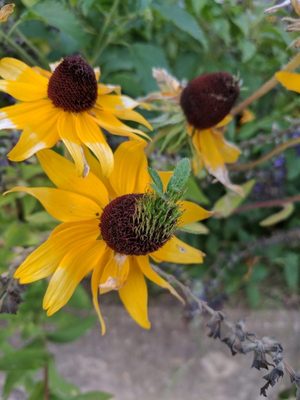
Black-Eyed Susan
Rudbeckia hirta
A cheerful, unkillable starter native that blooms its first year and seeds itself politely around.
- Full–part sun
- Dry–average
- 1.5–3 ft
- Blooms Jun–Sep
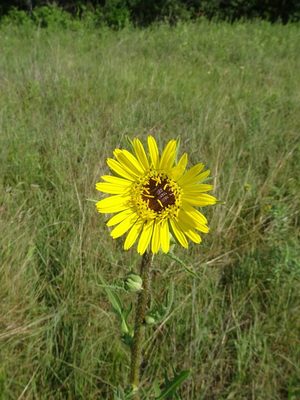
Compass Plant
Silphium laciniatum
A signature tallgrass-prairie plant with a taproot that can plunge fifteen feet down.
- Full sun
- Dry–average
- 5–9 ft
- Blooms Jul–Aug
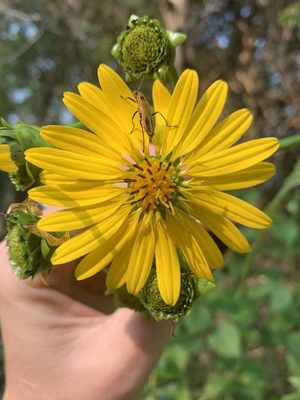
Cup Plant
Silphium perfoliatum
A prairie giant whose paired leaves hold rainwater for birds; goldfinches mob the seeds.
- Full–part sun
- Average–wet
- 5–8 ft
- Blooms Jul–Sep
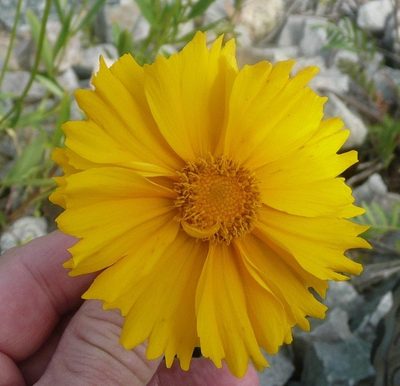
Lanceleaf Coreopsis
Coreopsis lanceolata
Sunny gold daisies for weeks in early summer on the leanest, driest soil you can offer.
- Full sun
- Dry–average
- 1.5–2 ft
- Blooms May–Jul