- Home
- Plant guide
- Idaho Fescue
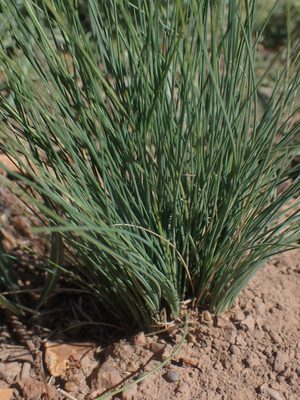
Idaho Fescue
Festuca idahoensis
Fine blue-green tussocks that hold their color through a dry summer and ask for nothing at all.
Native to: the Pacific Northwest · the Great Basin · the Mountain West
Growing Idaho Fescue
A bunchgrass, not a lawn: it grows in discrete tufts with room between them, which is what the wildflowers planted among it need. Cut it back hard only every few years, in early spring.
Where it belongs
Idaho fescue is one of the defining bunchgrasses of the interior West, growing from the east slope of the Cascades across the Great Basin and through the northern Rockies. It is a grass of open sagebrush steppe, dry meadows, ponderosa pine understory and grassland ridges.
It grows in discrete tufts with bare ground between them. That spacing matters: it is the structure the wildflowers of those communities evolved into, and it is why a planting of bunchgrass and forbs looks and functions unlike a lawn.
Growing it
Full sun, drainage, and patience for a season.
The foliage is fine, upright and distinctly blue-green, and it stays that color through summer drought when most cool-season grasses go dormant and straw colored. Flower stems rise a little above the leaves in early summer and dry to tan.
It is a cool-season grass, so it does most of its growing in spring and fall. Plant in fall where winters are mild enough, or early spring, and water it through the first summer only. After that, summer irrigation does more harm than good.
Do not cut it back every year. A bunchgrass keeps its living crown at the base, and annual shearing weakens the clump. Comb the dead thatch out with a gloved hand instead, and cut hard only every third or fourth spring if it becomes untidy.
What it feeds
Grasses do the quiet work in a planting. Idaho fescue is a larval host for several skipper butterflies, its seed feeds sparrows and juncos through winter, and the tussocks give ground-nesting bees and beetles the bare mineral soil between clumps that they need.
Living with it
Plant it in drifts rather than as single specimens, and set the wildflowers between the tufts rather than in a separate block. That is the pattern the Western dry meadow actually has.
It also holds a slope well, since the fibrous root mass is deep and dense, and it stays low enough that it never needs staking, screening or apology.
It’s drought-tolerant, deer-resistant, evergreen, easy to grow, and good for winter interest.Where it grows
Idaho Fescue is native to the Pacific Northwest. In the wild you’ll find it across Arizona · California · Colorado · Idaho · Montana · Nevada · New Mexico · Oregon · Utah · Washington and 1 more states. Always confirm it suits your specific county with your state native plant society before planting.
Regional Garden has written state guides covering Idaho Fescue in 11 of them so far.
Good for
Where to buy Idaho Fescue
Some links here are affiliate links and we may earn a small commission at no extra cost to you.
What a first-year Idaho Fescue planting needs, from a pH kit to mulch.
Companions & kin.
Natives that share Idaho Fescue’s range and conditions.
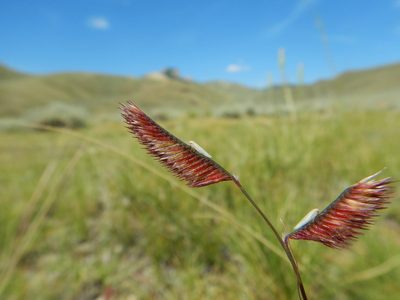
Blue Grama
Bouteloua gracilis
A fine, low prairie grass with quirky horizontal 'eyebrow' seed heads, and a great no-water lawn.
- Full sun
- Dry
- 8–20 in
- Blooms Jun–Aug

Blue Elderberry
Sambucus cerulea
Fast, big, and covered in flat cream flower heads, then dusty blue fruit that draws every fruit-eating bird in the county.
- Full–part sun
- Average–wet
- 8–20 ft
- Blooms Jun–Jul
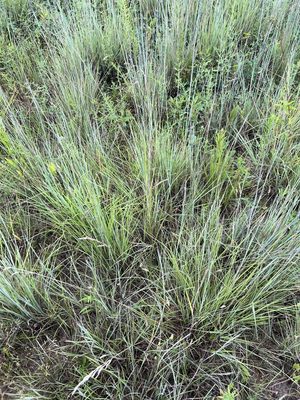
Little Bluestem
Schizachyrium scoparium
The backbone grass of the prairie: blue-green in summer, glowing copper and silver all winter.
- Full sun
- Dry–average
- 2–4 ft
- Fall color

Saskatoon Serviceberry
Amelanchier alnifolia
White flowers before the leaves, then fruit that tastes like a sweet blueberry, then orange fall color.
- Full–part sun
- Dry–average
- 6–15 ft
- Blooms Apr–May