- Home
- Plant guide
- Pink Muhly Grass
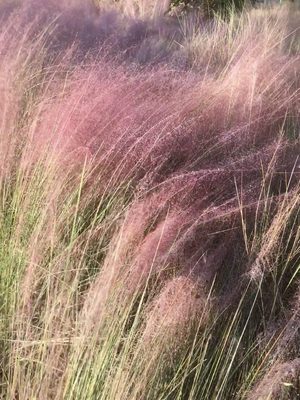
Pink Muhly Grass
Muhlenbergia capillaris
An autumn cloud of luminous pink that stops traffic when it blooms en masse.
Native to: the Southeast · the South-Central region · the Mid-Atlantic
Growing Pink Muhly Grass
Bombproof in heat, drought, sand, and salt spray. Plant in drifts and site it where the late-day sun can light up the pink haze.
Where it belongs
Pink muhly grass is native to the Southeast, Texas, and the southern Mid-Atlantic, growing in sandy pine flatwoods, on coastal dunes, and in dry rocky openings.
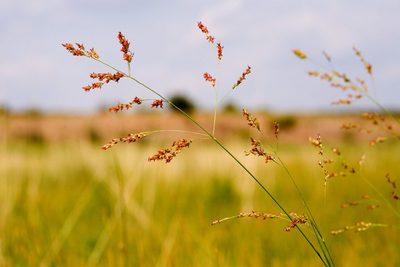
It is the most photographed native grass in the country, and the photographs are not exaggerated. In late September and October the flower panicles open into a cloud of fine pink-purple filaments that appear to float a foot above the foliage. Planted in a drift, backlit by low sun, the effect is unlike anything else available.
Note the hardiness range: zones 6 to 10. This is a warm-climate plant, and in zone 5 and colder it is unreliable or seasonal at best. Northern gardeners wanting a comparable fall grass should look at little bluestem instead.
Growing it
Full sun, dry to medium soil, in sand, loam, or rocky ground, zones 6 to 10. Two to three feet.
Sharp drainage. It grows in beach sand naturally and rots in heavy wet clay, particularly over winter.
It tolerates salt spray and salty soil, which makes it one of the better choices for coastal plantings and for the strip along a road that gets winter salt.
Plant it in groups. A single plant is a pleasant mound. A drift of seven or eleven is the reason to grow it, and the pink reads as a mass rather than as individual plants.
Site it against a dark background where possible, and where afternoon or evening light will come through the panicles from behind.
What it feeds
The seed feeds small birds through the fall and winter, and the dense clumps give cover.
The foliage hosts several skipper caterpillars, as most native bunchgrasses do. The tufted base shelters overwintering insects, and ground-nesting bees use bare sandy soil between clumps.
It offers no nectar, since grasses are wind pollinated. It earns its place through habitat structure and through the display.
Living with it
Deer do not eat it.
Do not cut it back in fall. The panicles fade to a soft tan and hold their form through winter, and cutting in September removes the entire point of the plant.
Cut back to a few inches in late winter, before new growth starts. Do not divide unless the center dies out; it prefers to be left alone.
Sources: USDA PLANTS Database (native range); Lady Bird Johnson Wildflower Center, University of Texas at Austin (species profile); USDA Natural Resources Conservation Service (coastal and salt tolerance notes).
It’s deer-resistant, drought-tolerant, salt-tolerant, showy, and good fall color.Where it grows
Pink Muhly Grass is native to the Southeast. In the wild you’ll find it across Alabama · Arkansas · Delaware · Florida · Georgia · Kentucky · Louisiana · Maryland · Mississippi · Missouri and 11 more states. Always confirm it suits your specific county with your state native plant society before planting.
Regional Garden has written state guides covering Pink Muhly Grass in 21 of them so far.
Good for
Where to buy Pink Muhly Grass
Some links here are affiliate links and we may earn a small commission at no extra cost to you.
What a first-year Pink Muhly Grass planting needs, from a pH kit to mulch.
Companions & kin.
Natives that share Pink Muhly Grass’s range and conditions.
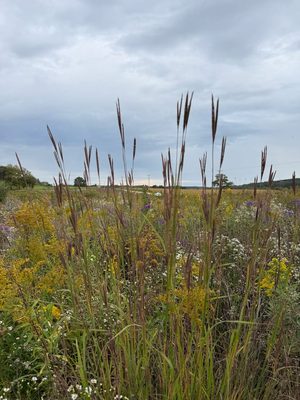
Big Bluestem
Andropogon gerardii
The towering 'turkey-foot' grass that once defined the tallgrass prairie, head-high by fall.
- Full sun
- Dry to wet
- 4–7 ft
- Fall color
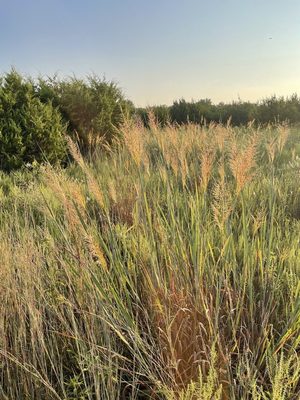
Indian Grass
Sorghastrum nutans
Tall golden plumes catch the autumn light above a classic tallgrass-prairie planting.
- Full sun
- Dry–average
- 4–7 ft
- Fall color
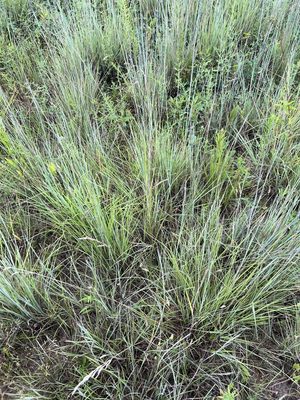
Little Bluestem
Schizachyrium scoparium
The backbone grass of the prairie: blue-green in summer, glowing copper and silver all winter.
- Full sun
- Dry–average
- 2–4 ft
- Fall color
Switchgrass
Panicum virgatum
An upright, clumping grass with a summer haze of pink seed heads and reliable golden fall color.
- Full–part sun
- Dry to wet
- 3–6 ft
- Fall color