- Home
- Plant guide
- Rattlesnake Master
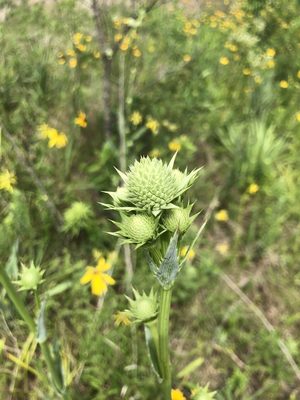
Rattlesnake Master
Eryngium yuccifolium
Architectural yucca-like leaves and golf-ball flower heads give the prairie its modern edge.
Native to: the Midwest · the Great Plains · the Southeast · the Mid-Atlantic · the South-Central region
Growing Rattlesnake Master
Sculptural in every season and a magnet for short-tongued bees and wasps. Drought-proof once the taproot is down.
Where it belongs
Rattlesnake master is native through the Midwest, Plains, Texas, and parts of the Southeast and Mid-Atlantic, growing in tallgrass prairie, on glades, and in open savanna.
It looks like nothing else in the eastern flora. The leaves are stiff, blue-green, parallel-veined, and edged with soft bristles, so the plant reads as a yucca or an agave. It is in fact in the carrot family, which is not obvious until you look at the flower structure closely.
The name comes from a folk belief that the root treated snakebite. It did not, and the plant has no relationship to rattlesnakes at all.
Growing it
Full sun, dry to medium soil, in loam, clay, or sand, zones 4 to 9. Three to five feet in flower.
It builds a deep taproot, which makes it drought-proof after establishment and essentially impossible to move afterward. Site it once.
Give it sun and drainage and it asks for nothing else. In shade or rich moist ground it flops, which is the main way people fail with it.
Seed needs cold-moist stratification and germination is often uneven. Small nursery plants set out in spring establish more reliably.
What it feeds
The flower head is a tight globe of tiny greenish-white flowers with nectar held shallowly and openly.
That makes it accessible to the insects that deep tubular flowers exclude: soldier beetles, small solitary bees, flower flies, and above all wasps. The wasp traffic is heavy and worth understanding rather than fearing. These are mostly solitary hunting wasps that take nectar as adults while provisioning their nests with caterpillars and other insects, and they are not aggressive around flowers.
A rare moth, the rattlesnake master borer, feeds only on this plant, and its conservation is tied directly to prairie remnants where the species survives.
Living with it
Deer leave it alone.
Its real distinction is that it looks composed in every season. The blue-green rosette holds all summer, the flower globes dry to a tan that keeps its shape, and the whole plant stands through winter snow without collapsing. Very few prairie species do that.
Use it where a planting needs structure rather than color. It works next to softer things such as prairie dropseed or little bluestem, where the contrast in texture does the work.
Leave it standing over winter and cut back in spring.
Sources: USDA PLANTS Database (native range); Lady Bird Johnson Wildflower Center, University of Texas at Austin (species profile); Xerces Society (rattlesnake master borer moth and prairie specialist insects).
It’s deer-resistant, drought-tolerant, and good for winter interest.Where it grows
Rattlesnake Master is native to the Midwest. In the wild you’ll find it across Alabama · Arkansas · Colorado · Delaware · Florida · Georgia · Illinois · Indiana · Iowa · Kansas and 26 more states. Always confirm it suits your specific county with your state native plant society before planting.
Regional Garden has written state guides covering Rattlesnake Master in 36 of them so far.
Good for
Where to buy Rattlesnake Master
Some links here are affiliate links and we may earn a small commission at no extra cost to you.
What a first-year Rattlesnake Master planting needs, from a pH kit to mulch.
Companions & kin.
Natives that share Rattlesnake Master’s range and conditions.

Common Yarrow
Achillea millefolium
A near-continental native with flat flower heads that feed tiny beneficial insects, tough as a weed.
- Full sun
- Dry–average
- 1.5–3 ft
- Blooms May–Aug
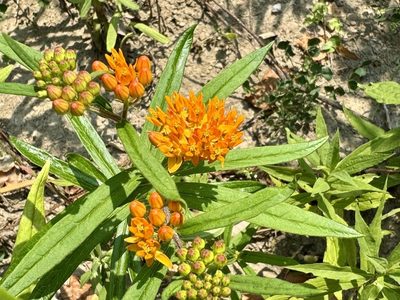
Butterfly Weed
Asclepias tuberosa
A monarch host plant and the brightest orange in the native palette, thriving in lean, dry soil.
- Full sun
- Dry
- 1.5–2.5 ft
- Blooms Jun–Aug
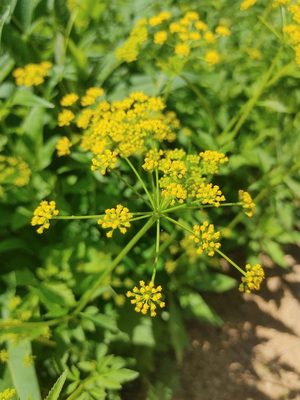
Golden Alexanders
Zizia aurea
Early flat gold heads that feed the first small bees and host the black swallowtail.
- Full–part sun
- Average–wet
- 1.5–2.5 ft
- Blooms Apr–Jun
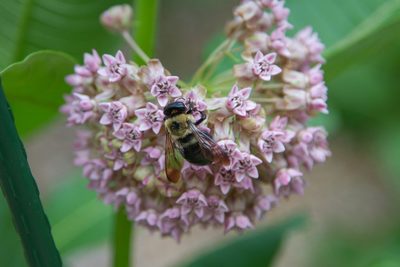
Common Milkweed
Asclepias syriaca
The classic monarch nursery, with honey-scented summer flowers that perfume an entire meadow.
- Full–part sun
- Dry–average
- 3–5 ft
- Blooms Jun–Jul