- Home
- Plant guide
- Showy Milkweed
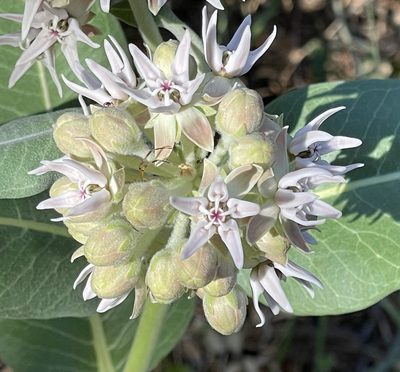
Henrik Kibak (CC BY)
Showy Milkweed
Asclepias speciosa
The West's monarch milkweed, bolder, fuzzier, and more drought-hardy than its eastern cousins.
Native to: the Great Plains · the Mountain West · the Great Basin · the desert Southwest · California · the Pacific Northwest
Growing Showy Milkweed
The keystone monarch host from the Plains to the Pacific. Spreads by rhizome in good soil; stays tighter where it's dry.
Where it belongs
Showy milkweed runs from the Great Plains west across the Rockies, the Great Basin, the Southwest, California, and the Pacific Northwest. It grows in open ground: roadsides, fence lines, old fields, and the edges of irrigation ditches.
This is the plant to reach for west of about the 100th meridian. Common milkweed and swamp milkweed are eastern species, and planting them in dry western gardens is a common way to waste three years finding out. Showy milkweed is the regionally correct answer, and it is a monarch host across the whole western migration.
Growing it
Full sun, dry to medium moisture, in loam, clay, or sand, hardy from zone 3 to zone 9. Two to four feet tall.
The leaves are the tell: thick, broad, and covered in fine gray felt, which is what lets it hold water in country where the air pulls it back out. The flower umbels are noticeably larger and more starlike than an eastern milkweed's, opening pink in June and July.
It does spread by rhizome in soil that suits it. In good moist ground it will form a colony, which may be exactly what you want in a meadow and a nuisance in a small bed. On dry ground it stays much tighter. If you want it contained, site it somewhere lean rather than fighting it in rich soil.
Start from seed with cold-moist stratification, or set out plants in fall. Like most milkweeds it puts its first year into root rather than top growth.
What it feeds
Monarchs lay on it throughout the West, and in much of that range there is simply no abundant alternative. Western monarch numbers have fallen sharply, and habitat plantings are one of the responses being pursued.
One regional caution worth knowing: near overwintering sites on the California coast, planting milkweed at all is discouraged, because it can interrupt the overwintering behavior. Inland, and away from the coast, the guidance is the opposite. Check with a local group before planting milkweed within a few miles of the coast in California.
The flowers also carry heavy scent and feed bees and butterflies broadly, quite apart from the host-plant role.
Living with it
The sap is toxic to livestock in quantity, which matters if you garden next to pasture. Wash hands after handling.
Leave the pods to open on their own. The silk carries seed on the wind, so remove pods before splitting if you want to limit volunteers.
Sources: USDA PLANTS Database (native range); Xerces Society (western monarch conservation and milkweed regional guidance); Lady Bird Johnson Wildflower Center, University of Texas at Austin (species profile).
It’s drought-tolerant, fragrant, and easy to grow.Where it grows
Showy Milkweed is native to the Great Plains. In the wild you’ll find it across Arizona · Arkansas · California · Colorado · Idaho · Illinois · Iowa · Kansas · Minnesota · Missouri and 12 more states. Always confirm it suits your specific county with your state native plant society before planting.
Regional Garden has written state guides covering Showy Milkweed in 22 of them so far.
Good for
Where to buy Showy Milkweed
Some links here are affiliate links and we may earn a small commission at no extra cost to you.
What a first-year Showy Milkweed planting needs, from a pH kit to mulch.
Companions & kin.
Natives that share Showy Milkweed’s range and conditions.

Common Yarrow
Achillea millefolium
A near-continental native with flat flower heads that feed tiny beneficial insects, tough as a weed.
- Full sun
- Dry–average
- 1.5–3 ft
- Blooms May–Aug
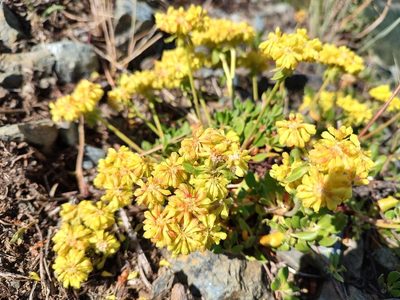
Sulphur-Flower Buckwheat
Eriogonum umbellatum
A low evergreen mat that turns sulphur yellow in midsummer, then rust, and feeds more butterflies than almost anything else on dry ground.
- Full sun
- Dry
- 6–18 in
- Blooms Jun–Aug

Blue Elderberry
Sambucus cerulea
Fast, big, and covered in flat cream flower heads, then dusty blue fruit that draws every fruit-eating bird in the county.
- Full–part sun
- Average–wet
- 8–20 ft
- Blooms Jun–Jul

Golden Currant
Ribes aureum
Yellow spring flowers that smell of cloves, black fruit birds strip in a week, and red foliage in the fall.
- Full–part sun
- Dry–average
- 4–8 ft
- Blooms Apr–May