- Home
- Plant guide
- Grasses, sedges and ferns
Grasses, sedges & ferns
None of these flower for insects, which is why they never appear on pollinator lists, and all three are load-bearing anyway.
Three different plants, grouped by what they do
Grasses are wind-pollinated flowering plants with narrow leaves and round hollow stems. Sedges look similar and are a separate family: their stems are solid and triangular, which is where the old line about sedges having edges comes from. Ferns are older than both and do not flower at all, reproducing by spores.
They are grouped here because they do the same job in a planting. They supply texture, structure, and ground-level cover, and they occupy the space between the flowers.
The warm season and cool season split
This explains the single most common panic about a new native planting.
Warm-season grasses stay dormant until the soil warms, often showing little growth until late May, then grow hard through summer heat and flower in late summer and fall. Big bluestem, indian grass, switchgrass, little bluestem, prairie dropseed, and the gramas are all warm season. Every spring, somebody digs one up assuming it died.
Cool-season plants grow in spring and fall and rest in summer heat. Pennsylvania sedge is the example here, and its early greening is exactly what makes it work as a shade lawn.
Why they matter to wildlife
Grasses offer no nectar and their pollen is not intended for insects, so they are absent from every pollinator plant list. That absence is misleading.
Skipper butterflies, which are a large share of the butterflies in most yards, feed on grass and sedge foliage as caterpillars, as do a great many moths. A garden with abundant nectar and no native grasses supports visiting adults and produces very few of its own.
Seed feeds sparrows, juncos, finches, and quail through fall and winter. Standing clumps are winter cover for ground-feeding birds, and the dense tufted bases shelter overwintering insects and sometimes bumblebee nests. Christmas fern's evergreen fronds flatten into a layer of ground cover that salamanders and insects use.
What they do for a planting
In a prairie, flowers grew embedded in grass, which held their stems upright, shaded out weed seedlings, and gave the whole community continuity. A bed of flowers spaced in mulch has none of that, and it flops, it weeds, and it reads as a collection rather than a place.
Ferns and sedges do the same work in shade, where they carry the composition for the eleven months the spring flowers are not doing anything.
Cut them back in late winter, never in fall. Cutting in October costs the winter form, the seed, the shelter, and the insects overwintering inside, in exchange for tidiness in a season nobody is out looking.
Sources: Lady Bird Johnson Wildflower Center, University of Texas at Austin (species profiles); US Department of Agriculture Natural Resources Conservation Service (warm and cool season grass identification and management); Xerces Society (native grasses and sedges as lepidoptera host plants and overwintering habitat).
12 species
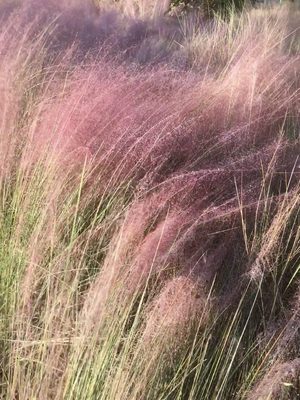
Pink Muhly Grass
Muhlenbergia capillaris
An autumn cloud of luminous pink that stops traffic when it blooms en masse.
- Full sun
- Dry–average
- 2–3 ft
- Blooms Sep–Oct
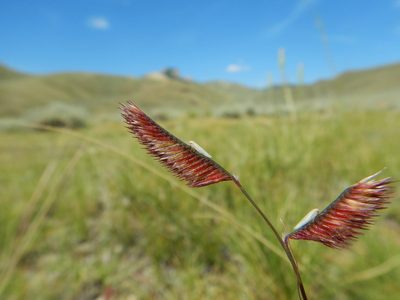
Blue Grama
Bouteloua gracilis
A fine, low prairie grass with quirky horizontal 'eyebrow' seed heads, and a great no-water lawn.
- Full sun
- Dry
- 8–20 in
- Blooms Jun–Aug
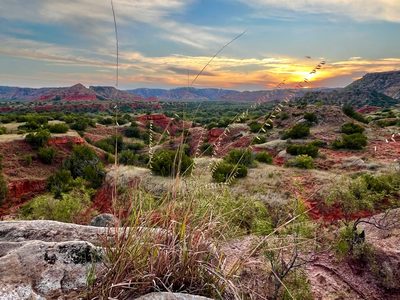
Sideoats Grama
Bouteloua curtipendula
A tidy mid-height grama hung with one-sided seed oats, and the state grass of Texas.
- Full sun
- Dry
- 1.5–2.5 ft
- Blooms Jun–Jul
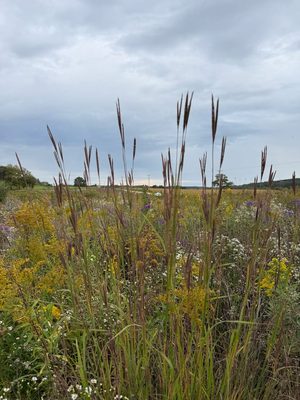
Big Bluestem
Andropogon gerardii
The towering 'turkey-foot' grass that once defined the tallgrass prairie, head-high by fall.
- Full sun
- Dry to wet
- 4–7 ft
- Fall color
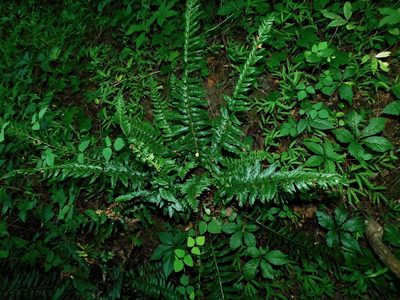
Christmas Fern
Polystichum acrostichoides
A tough evergreen fern that holds its green fronds through winter and grips a shady slope.
- Part shade
- Dry–average
- 1–2 ft
- Evergreen
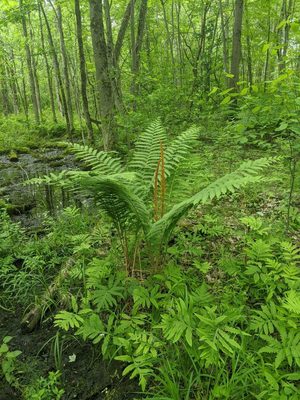
Cinnamon Fern
Osmundastrum cinnamomeum
A bold architectural fern for wet shade, with cinnamon-colored fertile fronds in spring.
- Part shade
- Average–wet
- 2–4 ft
- Foliage
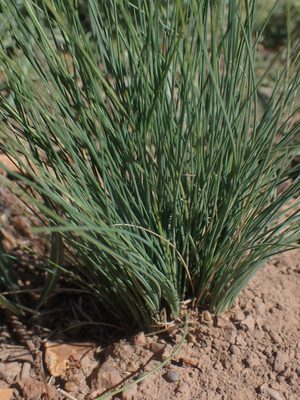
Idaho Fescue
Festuca idahoensis
Fine blue-green tussocks that hold their color through a dry summer and ask for nothing at all.
- Full–part sun
- Dry
- 0.8–2 ft
- Evergreen
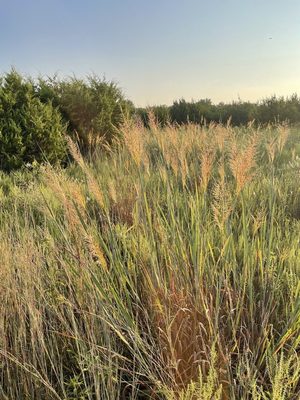
Indian Grass
Sorghastrum nutans
Tall golden plumes catch the autumn light above a classic tallgrass-prairie planting.
- Full sun
- Dry–average
- 4–7 ft
- Fall color
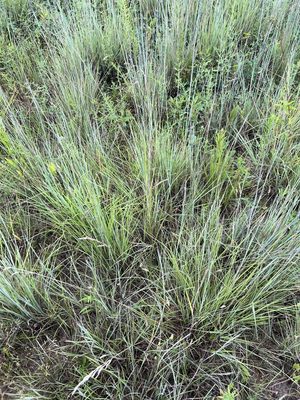
Little Bluestem
Schizachyrium scoparium
The backbone grass of the prairie: blue-green in summer, glowing copper and silver all winter.
- Full sun
- Dry–average
- 2–4 ft
- Fall color
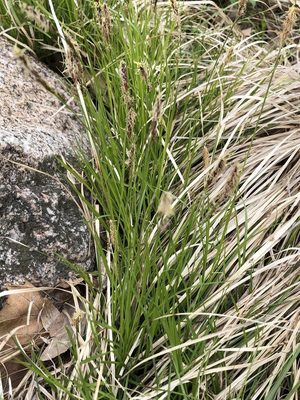
Pennsylvania Sedge
Carex pensylvanica
A soft, fine-textured sedge that makes a no-mow native lawn for dry shade.
- Part shade
- Dry–average
- 6–12 in
- Foliage
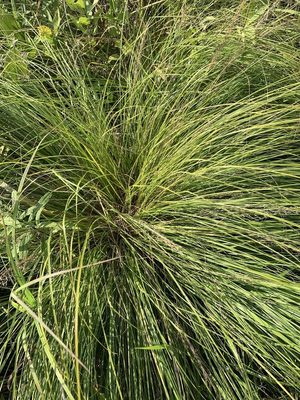
Prairie Dropseed
Sporobolus heterolepis
The most refined native grass: a fountain of fine emerald threads that turn amber in fall.
- Full sun
- Dry–average
- 2–3 ft
- Fall color
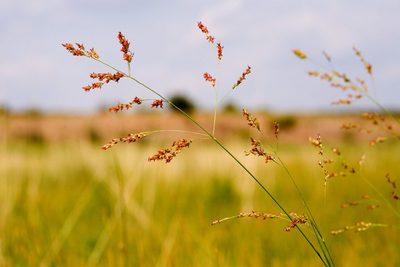
Switchgrass
Panicum virgatum
An upright, clumping grass with a summer haze of pink seed heads and reliable golden fall color.
- Full–part sun
- Dry to wet
- 3–6 ft
- Fall color