- Home
- Collections
- Evergreen
Native Evergreen Plants
Native shrubs, groundcovers, and ferns that hold their leaves through winter for year-round green, screening, and cover.
A regional asymmetry worth knowing
Eastern North America has relatively few native broadleaf evergreen shrubs. The hollies, mountain laurel, rhododendrons in the Appalachians, and a short list beyond that. This is why so much eastern landscaping leans on boxwood, Japanese holly, and euonymus, none of which are native and one of which is invasive.
The West has many. Manzanita, ceanothus, toyon, Oregon grape, and others hold their leaves through winter and form the structure of chaparral and dry woodland.
If you garden in the East, the practical native evergreens for structure are inkberry and the hollies, plus Christmas fern and foamflower at ground level. If you garden in the West, the choice is wide.
What evergreen structure does in winter
Two things, and neither is only about appearance.
It gives the garden something to look at for the four or five months when everything else is bare, which is a real argument in a northern climate.
And it provides cover. Winter shelter is genuinely scarce, and dense evergreen foliage is where small birds roost overnight against cold and hide from hawks. A yard of deciduous shrubs offers food in winter and no protection.
The hedge decision
Clipped evergreen hedges and foundation plantings are usually boxwood, and boxwood is under serious pressure from boxwood blight, which has spread across much of the country and can destroy a planting.
Inkberry holly is the native replacement in the East at roughly the same scale and takes shearing. Its known weakness is losing lower leaves with age, which newer selections were chosen to resist. In the West, toyon and the taller ceanothus make screens and hedges.
Match the species to the conditions rather than to the shape you want, and accept that a native hedge will look somewhat looser than clipped boxwood.
Winter care and the things that go wrong
Broadleaf evergreens lose water through their leaves all winter while frozen soil prevents replacing it, which is what causes the browned scorched foliage that shows up in March. Wind and winter sun both worsen it.
Two preventions: water deeply in late fall before the ground freezes, and site plants out of harsh winter wind and reflected afternoon sun rather than against a south-facing wall.
Check soil pH for the hollies and Oregon grape, which want acidic conditions and yellow between the leaf veins in alkaline ground.
And do not shear in late summer. New growth needs time to harden before frost.
Sources: Lady Bird Johnson Wildflower Center, University of Texas at Austin (species profiles and regional distribution); Mt. Cuba Center (Ilex glabra trial results); US Department of Agriculture and university extension (boxwood blight distribution and management, winter desiccation in broadleaf evergreens).
15 native species in this collection.
Evergreen natives carry the garden through the bare months, giving structure, privacy, and winter shelter for birds when the deciduous plants have dropped their leaves. Site broadleaf evergreens out of harsh winter wind and afternoon sun to prevent leaf scorch, and water them deeply going into a dry fall so they enter winter fully charged.
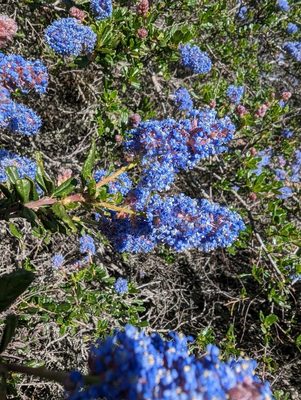
California Lilac
Ceanothus thyrsiflorus
Sheets of true-blue spring flowers on an evergreen shrub that hums with bees on the West Coast.
- Full sun
- Dry
- 6–20 ft
- Blooms Mar–May
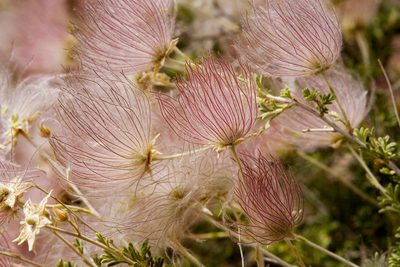
Apache Plume
Fallugia paradoxa
White rose-like flowers and feathery pink seed plumes together on one airy desert shrub.
- Full sun
- Dry
- 3–6 ft
- Blooms Apr–Sep
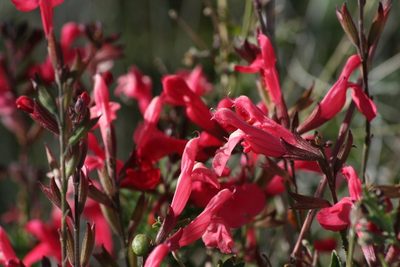
Autumn Sage
Salvia greggii
A tough little evergreen sage that feeds hummingbirds from spring to frost in Texas and the Southwest.
- Full–part sun
- Dry
- 2–3 ft
- Blooms Apr–Oct
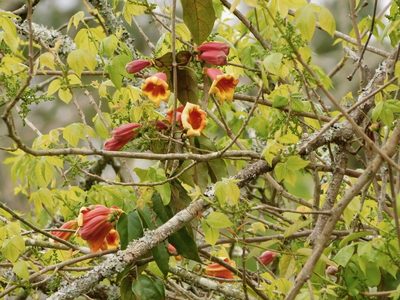
Crossvine
Bignonia capreolata
A vigorous, semi-evergreen climber that smothers a fence in orange-red trumpets each spring.
- Full–part sun
- Dry–average
- 25–50 ft
- Blooms Apr–May
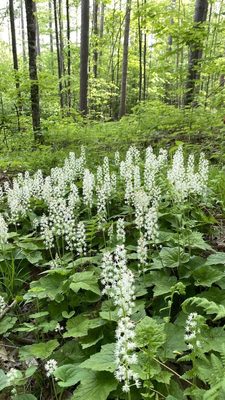
Foamflower
Tiarella cordifolia
Frothy white spring spires over heart-shaped, semi-evergreen foliage in deep shade.
- Part shade
- Average
- 6–12 in
- Blooms Apr–May
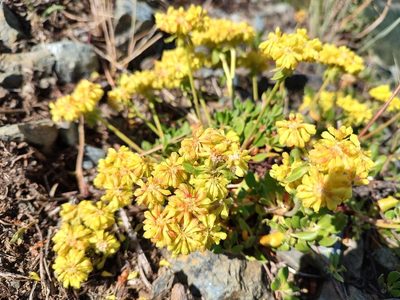
Sulphur-Flower Buckwheat
Eriogonum umbellatum
A low evergreen mat that turns sulphur yellow in midsummer, then rust, and feeds more butterflies than almost anything else on dry ground.
- Full sun
- Dry
- 6–18 in
- Blooms Jun–Aug
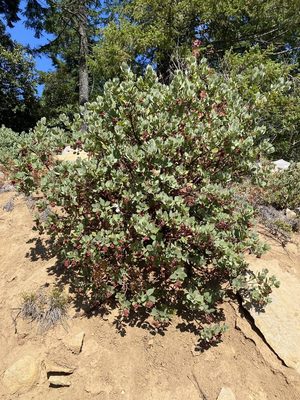
Hairy Manzanita
Arctostaphylos columbiana
Sculptural mahogany bark and early urn-shaped flowers that feed the West Coast's first bees of spring.
- Full–part sun
- Dry
- 3–9 ft
- Blooms Mar–May
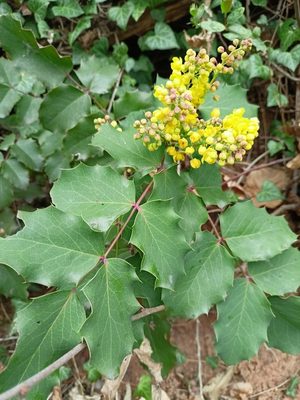
Oregon Grape
Berberis aquifolium
Holly-like evergreen leaves, fragrant yellow spring flowers, and blue berries. It is Oregon's state flower.
- Sun to shade
- Dry–average
- 3–6 ft
- Blooms Mar–Apr
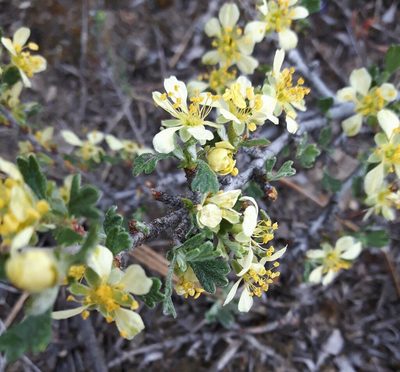
Antelope Bitterbrush
Purshia tridentata
A sagebrush-country shrub that fixes its own nitrogen, feeds native bees in spring, and never wants watering.
- Full sun
- Dry
- 3–8 ft
- Blooms Apr–Jun
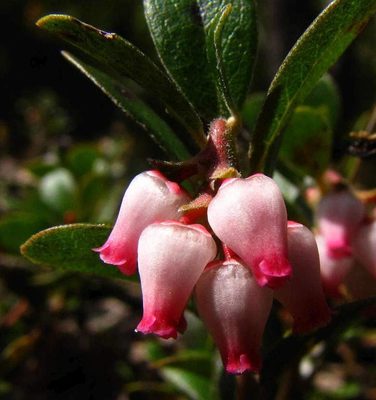
Bearberry
Arctostaphylos uva-ursi
A glossy evergreen mat that grips sandy, sunny banks where nothing else will hold, even by the sea.
- Full–part sun
- Dry
- 4–8 in
- Blooms Apr–May
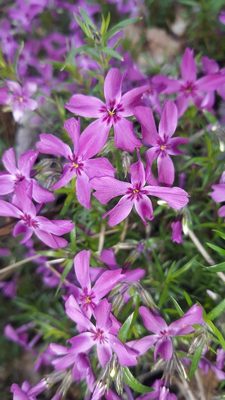
Creeping Phlox
Phlox subulata
A sheet of spring color that spills over walls and stitches a dry, sunny slope together.
- Full–part sun
- Dry–average
- 4–8 in
- Blooms Apr–May
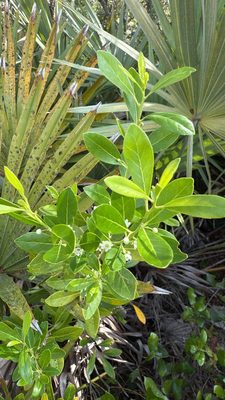
Inkberry Holly
Ilex glabra
A native evergreen alternative to boxwood that takes wet feet and feeds bees and birds.
- Full–part sun
- Average–wet
- 4–8 ft
- Blooms May–Jun
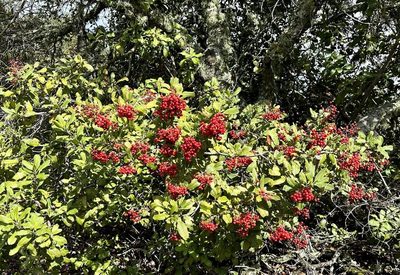
Toyon
Heteromeles arbutifolia
California's evergreen 'Christmas berry,' with white summer flowers and red winter fruit for birds.
- Full–part sun
- Dry
- 8–15 ft
- Blooms Jun–Jul
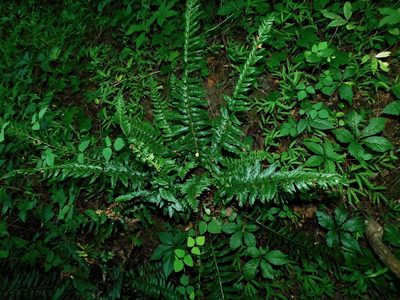
Christmas Fern
Polystichum acrostichoides
A tough evergreen fern that holds its green fronds through winter and grips a shady slope.
- Part shade
- Dry–average
- 1–2 ft
- Evergreen
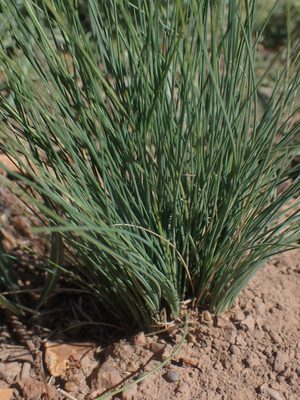
Idaho Fescue
Festuca idahoensis
Fine blue-green tussocks that hold their color through a dry summer and ask for nothing at all.
- Full–part sun
- Dry
- 0.8–2 ft
- Evergreen
Evergreen, near you.
Whether a species belongs in your yard depends on where you garden. These state guides cover it.
Where to find evergreen plants
Some links here are affiliate links and we may earn a small commission at no extra cost to you.
What a first-year Evergreen planting needs, from a pH kit to mulch.