- Home
- Collections
- Fragrant
Fragrant Native Plants
Native plants with scented flowers or foliage, the ones that make a garden smell as good as it looks.
Flower scent is a signal aimed at somebody
Fragrance costs a plant energy, so it is produced when the intended visitor is active and not otherwise.
Sweet scent that strengthens at dusk is aimed at night-flying moths. Woodland phlox does this, and its evening fragrance is much stronger than its afternoon one. Plants pollinated by day-flying insects are usually strongest in warm midday sun instead: swamp milkweed and Joe-Pye weed both carry vanilla notes that peak in afternoon heat.
Some scents are aimed at nobody you would expect. Prairie dropseed's flowers smell of coriander and buttered popcorn, unmistakable on an August evening from several feet away, and the plant is wind pollinated, so the scent is a curiosity rather than a signal.
And a few are timed oddly. Chocolate flower genuinely smells of cocoa, strongest in the cool of early morning and gone by midday, which means most people never encounter it.
Foliage scent is defense
The plants whose leaves smell strongly when crushed are almost all producing volatile oils to make themselves unpalatable, and that is exactly why they turn up on deer-resistant lists.
Mountain mint smells of spearmint. Anise hyssop smells of licorice. Wild bergamot and beebalm smell of oregano and thyme. Yarrow is sharply herbal. Aromatic aster smells of balsam. Spicebush is citrus. Fragrant sumac is a sharp herbal note.
None of these release scent on their own. You have to brush them or crush a leaf, which changes where they should go.
Site scent where people are
This is the practical conclusion, and it is the one most often missed.
Fragrance from foliage requires contact, so those plants belong at the edge of a path where a leg brushes them, beside a bench, or at the corner where people turn. Planted at the back of a border they may as well not be fragrant at all.
Flower fragrance carries a short distance in still air and further on a warm evening, so those plants belong near a door, under a window that opens, or around a place people sit after dark.
Enclosure helps. Scent pools in a courtyard, along a fence, or in a sheltered corner, and disperses in an open windy yard.
Two cautions
Fragrance is not evenly distributed among cultivars. Selections bred for flower size or color have in some cases lost scent, so buy fragrant plants in bloom where possible and check.
And strongly aromatic foliage can irritate skin for some people, and several of these plants are ones to handle with gloves rather than to taste. Growing them for scent does not make them edible.
Sources: Lady Bird Johnson Wildflower Center, University of Texas at Austin (species profiles and fragrance notes); Xerces Society (moth pollination and night-scented flowers); Mt. Cuba Center (trial observations on cultivar characteristics).
17 native species in this collection.
Fragrance is easy to overlook on paper and unforgettable in person, so plant the scented natives where you will brush past them: along a path, by a door, beside a bench. Some carry it in the flowers and some in the crushed leaves, and many of the aromatic-leaved species double as deer-resistant. Site them in sun, where warmth lifts the scent into the air.
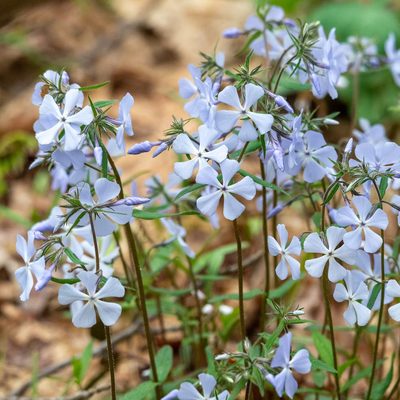
Woodland Phlox
Phlox divaricata
A sweetly fragrant, low spreading phlox that carpets the spring woodland floor in blue.
- Part shade
- Average
- 10–15 in
- Blooms Apr–May
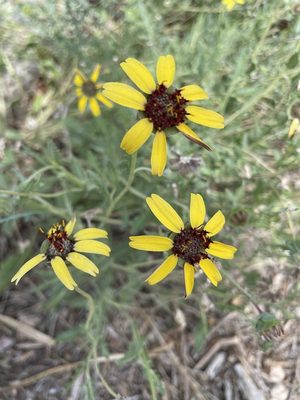
Chocolate Flower
Berlandiera lyrata
Yellow daisies that genuinely smell of chocolate each morning, and bloom all summer in heat.
- Full sun
- Dry
- 1–2 ft
- Blooms May–Sep
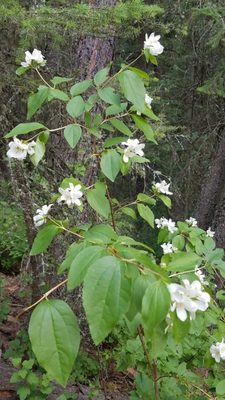
Lewis's Mock Orange
Philadelphus lewisii
Two weeks in early summer when the whole shrub smells of orange blossom, and the rest of the year asking for nothing.
- Full–part sun
- Dry–average
- 5–10 ft
- Blooms May–Jun
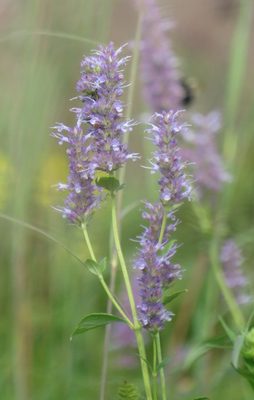
Anise Hyssop
Agastache foeniculum
Months of lavender spikes over licorice-scented foliage, mobbed by bees from dawn to dusk.
- Full–part sun
- Dry–average
- 2–4 ft
- Blooms Jun–Sep

Wild Bergamot
Monarda fistulosa
Ragged lavender crowns that hum with bees, hummingbirds, and clearwing moths; foliage smells of oregano.
- Full–part sun
- Dry–average
- 2–4 ft
- Blooms Jun–Aug
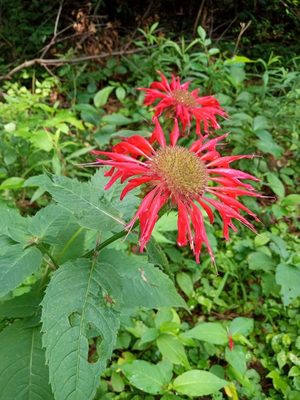
Scarlet Beebalm
Monarda didyma
A hummingbird magnet with fireworks-red blooms for moist, rich soil at a woodland edge.
- Full–part sun
- Average–wet
- 2.5–4 ft
- Blooms Jul–Aug
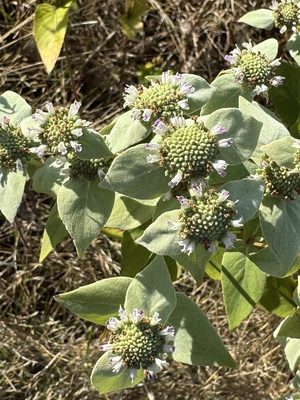
Short-Toothed Mountain Mint
Pycnanthemum muticum
Trial after trial names it the single most attractive plant to pollinators, and deer won't touch it.
- Full–part sun
- Dry–average
- 2–3 ft
- Blooms Jul–Sep
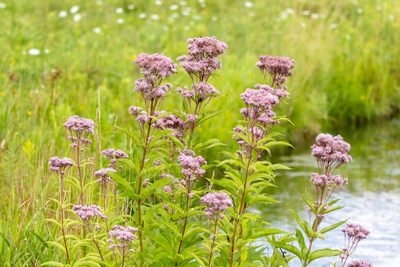
Spotted Joe-Pye Weed
Eutrochium maculatum
Statuesque domes of vanilla-scented mauve that swallowtails and monarchs cover in late summer.
- Full–part sun
- Average–wet
- 4–7 ft
- Blooms Jul–Sep
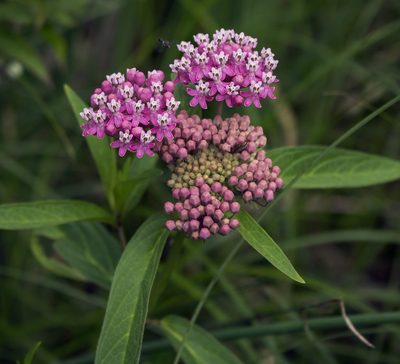
Swamp Milkweed
Asclepias incarnata
A well-behaved, clump-forming milkweed for wet ground: a monarch host that also looks at home in a border.
- Full–part sun
- Average–wet
- 3–4 ft
- Blooms Jul–Aug
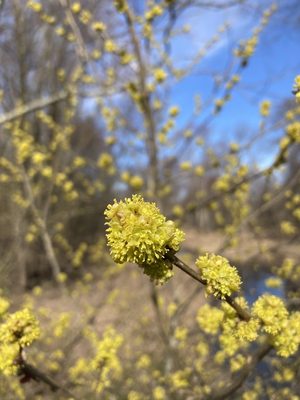
Spicebush
Lindera benzoin
An early-blooming shade shrub, host to the spicebush swallowtail, with butter-yellow fall color.
- Part shade
- Average–wet
- 6–12 ft
- Blooms Mar–Apr
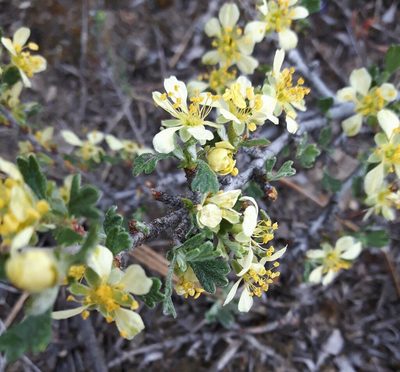
Antelope Bitterbrush
Purshia tridentata
A sagebrush-country shrub that fixes its own nitrogen, feeds native bees in spring, and never wants watering.
- Full sun
- Dry
- 3–8 ft
- Blooms Apr–Jun

Golden Currant
Ribes aureum
Yellow spring flowers that smell of cloves, black fruit birds strip in a week, and red foliage in the fall.
- Full–part sun
- Dry–average
- 4–8 ft
- Blooms Apr–May
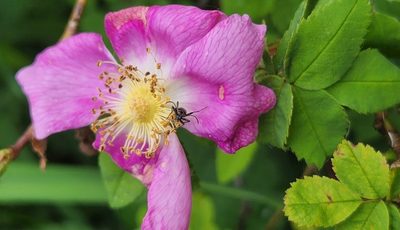
Nootka Rose
Rosa nutkana
One ring of pink petals, a real rose scent, and hips that stay scarlet on bare canes all winter.
- Full–part sun
- Average–wet
- 3–9 ft
- Blooms May–Jun
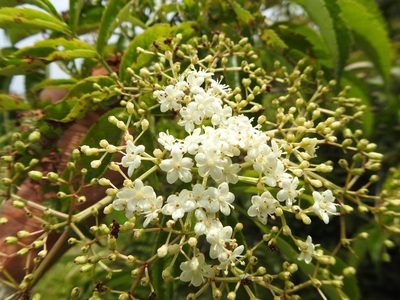
American Elderberry
Sambucus canadensis
Big lacy flower heads in summer give way to purple-black berries for both birds and your kitchen.
- Full–part sun
- Average–wet
- 6–12 ft
- Blooms Jun–Jul
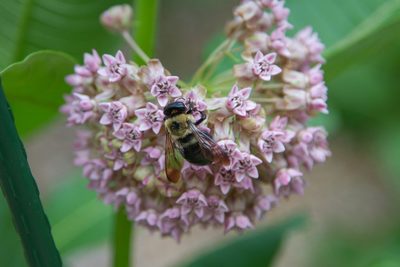
Common Milkweed
Asclepias syriaca
The classic monarch nursery, with honey-scented summer flowers that perfume an entire meadow.
- Full–part sun
- Dry–average
- 3–5 ft
- Blooms Jun–Jul
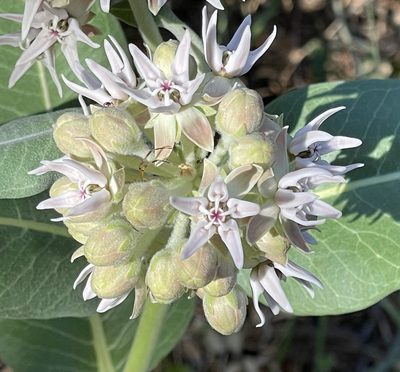
Showy Milkweed
Asclepias speciosa
The West's monarch milkweed, bolder, fuzzier, and more drought-hardy than its eastern cousins.
- Full sun
- Dry–average
- 2–4 ft
- Blooms Jun–Jul
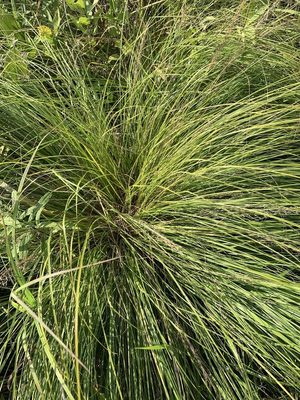
Prairie Dropseed
Sporobolus heterolepis
The most refined native grass: a fountain of fine emerald threads that turn amber in fall.
- Full sun
- Dry–average
- 2–3 ft
- Fall color
Fragrant, near you.
Whether a species belongs in your yard depends on where you garden. These state guides cover it.
Where to find fragrant plants
Some links here are affiliate links and we may earn a small commission at no extra cost to you.
What a first-year Fragrant planting needs, from a pH kit to mulch.