- Home
- Plant guide
- Wildflowers and perennials
Wildflowers & perennials
The layer that does most of the feeding. Chosen well, a few dozen species cover the whole insect year; chosen for looks alone, they cover about three weeks of it.
What this group is
Herbaceous perennials: plants with no woody stem that die back to the ground each winter and return from the root. It is the largest group on this site and the one most people mean by native plants.
A few here are technically something else. Virginia bluebells is a spring ephemeral, completing its whole above-ground year in about ten weeks before going dormant. California poppy and desert marigold behave as perennials in mild climates and as reseeding annuals elsewhere. Autumn sage and Turk's cap are subshrubs, woody at the base and herbaceous above.
Buy for succession, not for the display bench
Nurseries sell what is in flower, so a garden assembled over three or four spring visits is a garden that flowers in spring.
The stretches that matter most to insects are the ones nobody buys for. Late March and April, when bumblebee queens are founding colonies alone with no stores. Late July and August, when the early perennials are done and the fall species have not started. And September into November, when new queens are feeding before winter and monarchs are moving south.
Pick something for each of six windows across the season rather than a dozen things that all peak in June. Pasque flower and golden alexanders open the year; foxglove beardtongue and lanceleaf coreopsis bridge to summer; blanketflower, mountain mint, and chocolate flower carry the heat; the asters and goldenrods close it.
The two habits that decide where a plant goes
Perennials divide into clumpers and spreaders, and the distinction predicts more about your future workload than anything on the label.
Clumpers stay where they are put. Purple coneflower, prairie dropseed, rattlesnake master, butterfly weed, and Culver's root will occupy the same footprint for many years. Several of them build a deep taproot, which makes them effectively permanent and also impossible to move later, so site them once.
Spreaders travel, by rhizome or by seed. Common milkweed, obedient plant, mountain mint, and Maximilian sunflower all will. That vigor is exactly what makes them useful on a bank or in a meadow, and exactly what makes them a chore next to something slow.
Neither habit is a fault. Putting one where the other belongs is.
Two rules that cover most failures
Do not improve the soil. Most of these species evolved in lean unamended ground, and compost and fertilizer produce soft tall growth that falls over and rots in winter. Flopping is nearly always a fertility or light problem rather than a staking problem.
Cut back in spring, not fall. Stem-nesting bees overwinter inside hollow stems and many insects overwinter in the litter, so a bed cleaned out in October throws away the season's work. The seed heads feed birds in the meantime.
Sources: Lady Bird Johnson Wildflower Center, University of Texas at Austin (species profiles and growth habits); Xerces Society (bloom succession, overwintering habitat, and spring and fall forage gaps); Mt. Cuba Center (native perennial trials on longevity, habit, and garden performance).
52 species
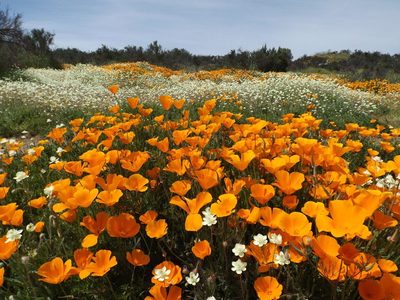
California Poppy
Eschscholzia californica
The silken orange state flower of California, painting dry hillsides every spring.
- Full sun
- Dry
- 8–18 in
- Blooms Mar–Jun
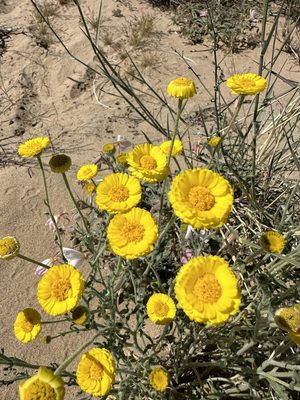
Desert Marigold
Baileya multiradiata
A silver-leaved desert daisy that blooms almost year-round on rainfall alone.
- Full sun
- Dry
- 12–18 in
- Blooms Mar–Oct
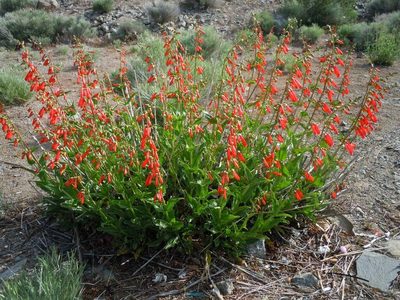
Firecracker Penstemon
Penstemon eatonii
Scarlet tubular flowers timed to the spring hummingbird migration through the desert Southwest.
- Full sun
- Dry
- 1.5–3 ft
- Blooms Mar–May
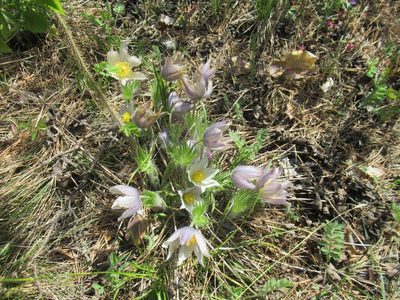
Pasque Flower
Pulsatilla patens
One of the very first prairie flowers, silky purple cups pushing up through cold early-spring ground.
- Full sun
- Dry
- 6–12 in
- Blooms Mar–Apr
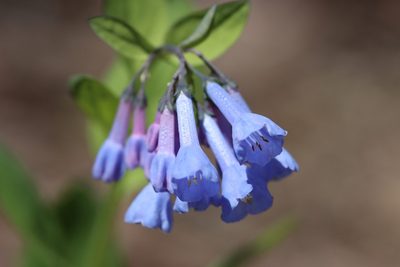
Virginia Bluebells
Mertensia virginica
Pink buds opening to drifts of sky-blue bells, then vanishing underground by summer.
- Part shade
- Average–wet
- 1–2 ft
- Blooms Mar–May
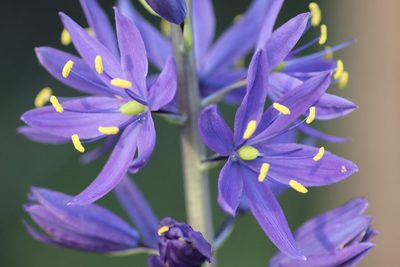
Common Camas
Camassia quamash
The blue that used to run across Northwest prairies in spring, and the one bulb that actually wants a wet winter.
- Full–part sun
- Average–wet
- 1–2.5 ft
- Blooms Apr–May
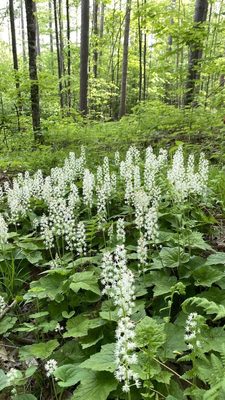
Foamflower
Tiarella cordifolia
Frothy white spring spires over heart-shaped, semi-evergreen foliage in deep shade.
- Part shade
- Average
- 6–12 in
- Blooms Apr–May
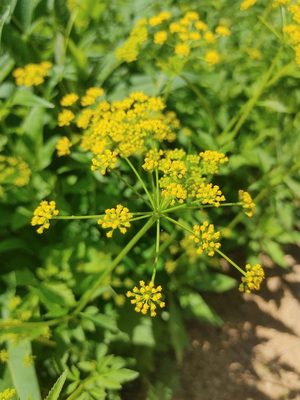
Golden Alexanders
Zizia aurea
Early flat gold heads that feed the first small bees and host the black swallowtail.
- Full–part sun
- Average–wet
- 1.5–2.5 ft
- Blooms Apr–Jun

Prairie Smoke
Geum triflorum
Nodding pink spring bells that turn into smoky, feathered seed plumes, the show after the flower.
- Full–part sun
- Dry
- 6–16 in
- Blooms Apr–May
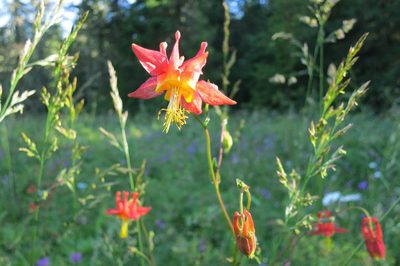
Western Columbine
Aquilegia formosa
The West's nodding red-and-gold columbine, the first big hummingbird draw of the mountain spring.
- Part shade
- Average
- 1.5–3 ft
- Blooms Apr–Jul
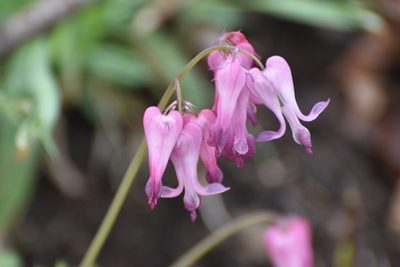
Wild Bleeding Heart
Dicentra eximia
Ferny mounds that drip with pink hearts from spring straight through summer in shade.
- Part shade
- Average
- 12–18 in
- Blooms Apr–Aug
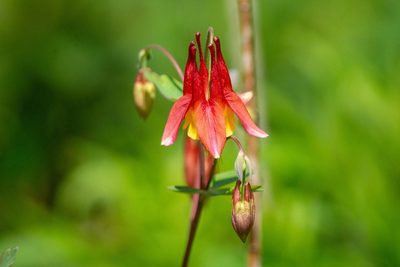
Wild Columbine
Aquilegia canadensis
Nodding red-and-gold lanterns that greet the first spring hummingbirds at a woodland edge.
- Part shade
- Dry–average
- 1–2.5 ft
- Blooms Apr–Jun
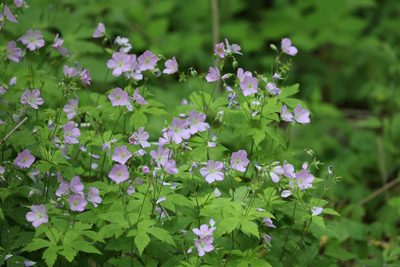
Wild Geranium
Geranium maculatum
A mounding woodland staple with lilac-pink spring flowers and good fall foliage color.
- Part shade
- Average
- 1.5–2 ft
- Blooms Apr–Jun
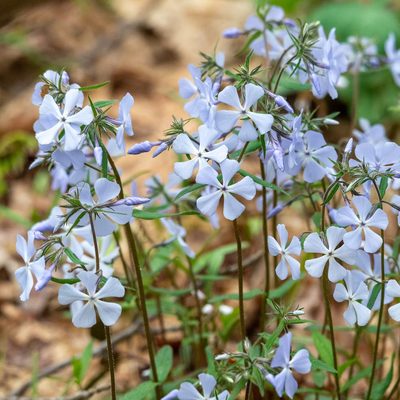
Woodland Phlox
Phlox divaricata
A sweetly fragrant, low spreading phlox that carpets the spring woodland floor in blue.
- Part shade
- Average
- 10–15 in
- Blooms Apr–May
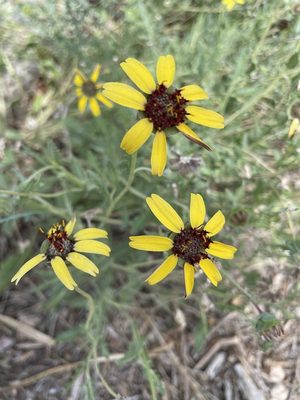
Chocolate Flower
Berlandiera lyrata
Yellow daisies that genuinely smell of chocolate each morning, and bloom all summer in heat.
- Full sun
- Dry
- 1–2 ft
- Blooms May–Sep

Common Yarrow
Achillea millefolium
A near-continental native with flat flower heads that feed tiny beneficial insects, tough as a weed.
- Full sun
- Dry–average
- 1.5–3 ft
- Blooms May–Aug
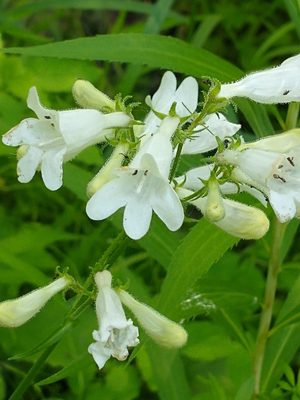
Foxglove Beardtongue
Penstemon digitalis
Airy white bells in early summer, a bridge bloom between spring ephemerals and the summer prairie.
- Full–part sun
- Dry–average
- 2–4 ft
- Blooms May–Jun
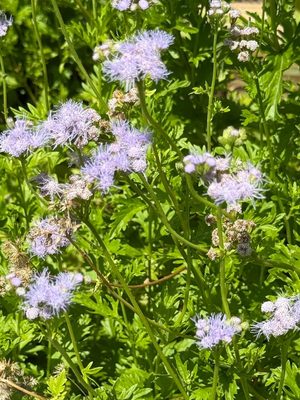
Gregg's Mistflower
Conoclinium greggii
Fuzzy blue flowers that act like a magnet for queen and monarch butterflies in the Southwest.
- Full–part sun
- Dry–average
- 1–2 ft
- Blooms May–Oct
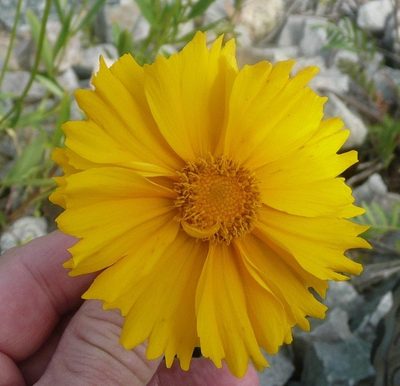
Lanceleaf Coreopsis
Coreopsis lanceolata
Sunny gold daisies for weeks in early summer on the leanest, driest soil you can offer.
- Full sun
- Dry–average
- 1.5–2 ft
- Blooms May–Jul
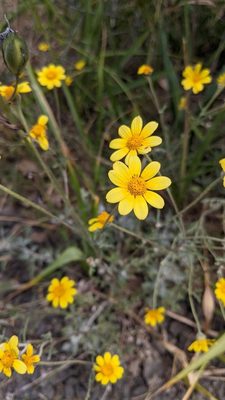
Oregon Sunshine
Eriophyllum lanatum
Silver-woolly foliage under golden daisies, on a plant that treats a hot dry summer as normal weather.
- Full sun
- Dry
- 0.7–2 ft
- Blooms May–Jul
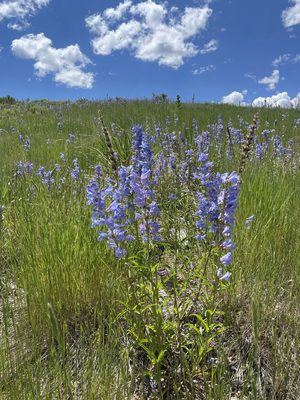
Rocky Mountain Penstemon
Penstemon strictus
Spires of glossy blue tubes built for bumblebees, and one of the easiest western penstemons to grow.
- Full sun
- Dry
- 1.5–2.5 ft
- Blooms May–Jul
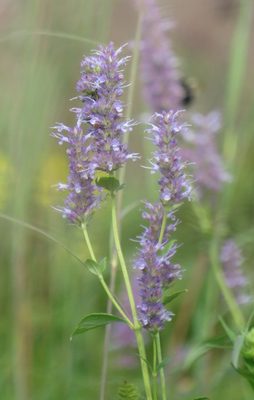
Anise Hyssop
Agastache foeniculum
Months of lavender spikes over licorice-scented foliage, mobbed by bees from dawn to dusk.
- Full–part sun
- Dry–average
- 2–4 ft
- Blooms Jun–Sep
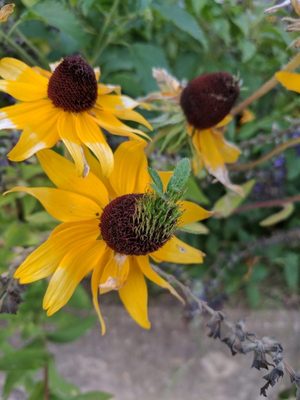
Black-Eyed Susan
Rudbeckia hirta
A cheerful, unkillable starter native that blooms its first year and seeds itself politely around.
- Full–part sun
- Dry–average
- 1.5–3 ft
- Blooms Jun–Sep
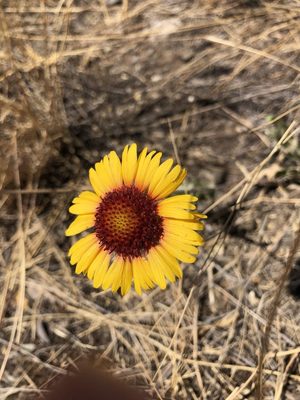
Blanketflower
Gaillardia aristata
Fiery red-and-gold wheels that bloom nonstop all summer on hot, dry, sandy ground.
- Full sun
- Dry
- 1–2.5 ft
- Blooms Jun–Sep
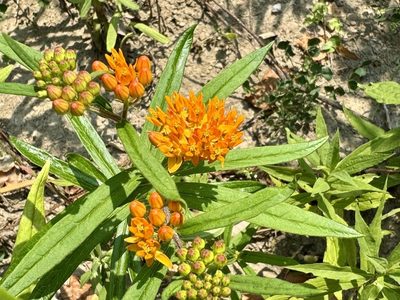
Butterfly Weed
Asclepias tuberosa
A monarch host plant and the brightest orange in the native palette, thriving in lean, dry soil.
- Full sun
- Dry
- 1.5–2.5 ft
- Blooms Jun–Aug
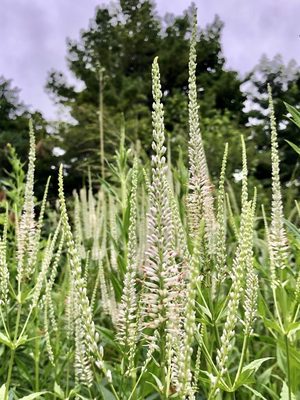
Culver's Root
Veronicastrum virginicum
Elegant white candelabra spires that bring vertical structure and a haze of bees to midsummer.
- Full–part sun
- Average–wet
- 3–5 ft
- Blooms Jun–Aug
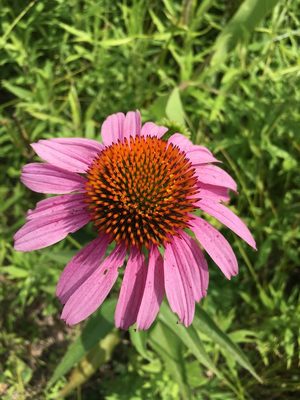
Purple Coneflower
Echinacea purpurea
The garden workhorse: months of nectar for bees and butterflies, then seed heads goldfinches strip all winter.
- Full–part sun
- Dry–average
- 2–4 ft
- Blooms Jun–Sep

Wild Bergamot
Monarda fistulosa
Ragged lavender crowns that hum with bees, hummingbirds, and clearwing moths; foliage smells of oregano.
- Full–part sun
- Dry–average
- 2–4 ft
- Blooms Jun–Aug
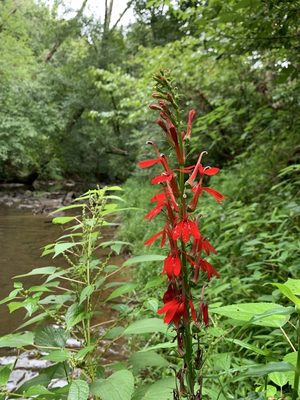
Cardinal Flower
Lobelia cardinalis
The most intense red in the native flora, built for the hummingbirds that pollinate it.
- Full–part sun
- Average–wet
- 2–4 ft
- Blooms Jul–Sep
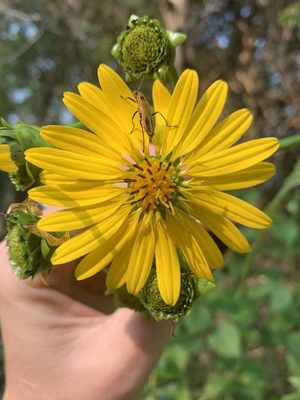
Cup Plant
Silphium perfoliatum
A prairie giant whose paired leaves hold rainwater for birds; goldfinches mob the seeds.
- Full–part sun
- Average–wet
- 5–8 ft
- Blooms Jul–Sep
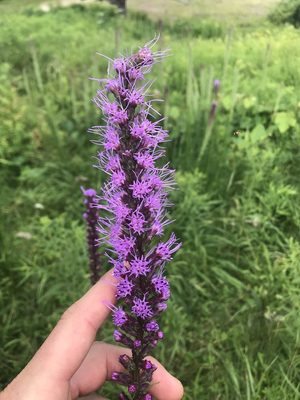
Dense Blazing Star
Liatris spicata
Vertical wands of magenta that open top-down and pull in every swallowtail in the neighborhood.
- Full sun
- Average–wet
- 2–4 ft
- Blooms Jul–Aug
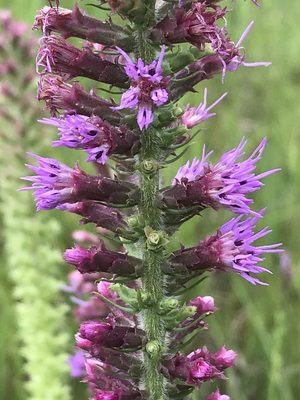
Prairie Blazing Star
Liatris pycnostachya
The tallest blazing star, a five-foot torch of purple over the high-summer prairie.
- Full sun
- Dry–average
- 3–5 ft
- Blooms Jul–Aug
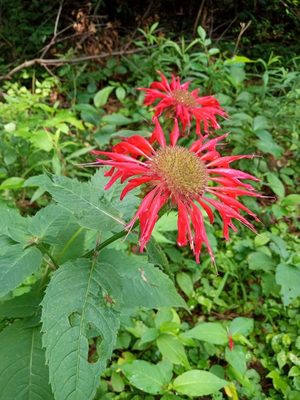
Scarlet Beebalm
Monarda didyma
A hummingbird magnet with fireworks-red blooms for moist, rich soil at a woodland edge.
- Full–part sun
- Average–wet
- 2.5–4 ft
- Blooms Jul–Aug
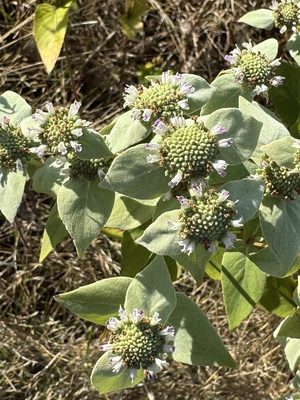
Short-Toothed Mountain Mint
Pycnanthemum muticum
Trial after trial names it the single most attractive plant to pollinators, and deer won't touch it.
- Full–part sun
- Dry–average
- 2–3 ft
- Blooms Jul–Sep
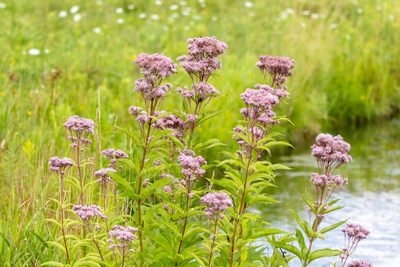
Spotted Joe-Pye Weed
Eutrochium maculatum
Statuesque domes of vanilla-scented mauve that swallowtails and monarchs cover in late summer.
- Full–part sun
- Average–wet
- 4–7 ft
- Blooms Jul–Sep
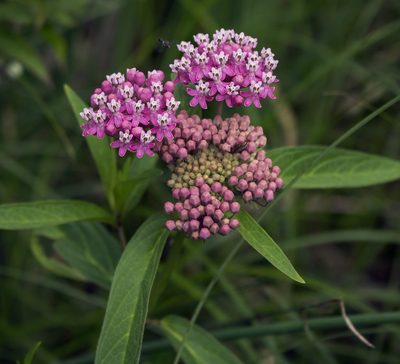
Swamp Milkweed
Asclepias incarnata
A well-behaved, clump-forming milkweed for wet ground: a monarch host that also looks at home in a border.
- Full–part sun
- Average–wet
- 3–4 ft
- Blooms Jul–Aug
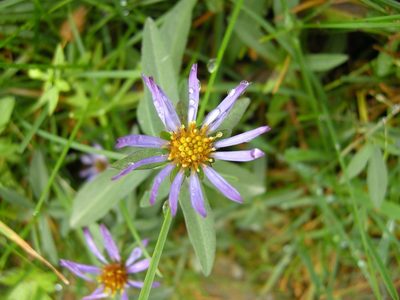
Douglas Aster
Symphyotrichum subspicatum
The Pacific Northwest's late-season aster, feeding bees into the first cool, wet days of fall.
- Full–part sun
- Average–wet
- 2–4 ft
- Blooms Aug–Oct
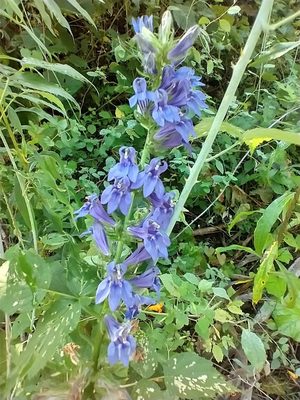
Great Blue Lobelia
Lobelia siphilitica
Spikes of true blue for late summer shade and damp ground, worked hard by bumblebees.
- Full–part sun
- Average–wet
- 2–3 ft
- Blooms Aug–Sep
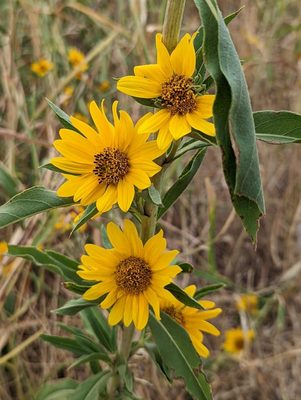
Maximilian Sunflower
Helianthus maximiliani
A towering fall sunflower whose stems are studded top to bottom with gold, then thick with seed for birds.
- Full sun
- Dry–average
- 5–8 ft
- Blooms Aug–Oct
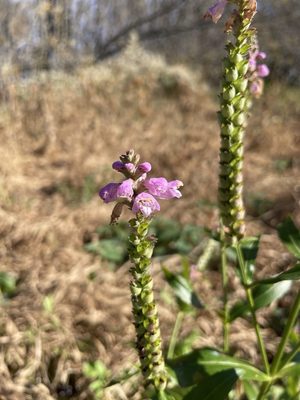
Obedient Plant
Physostegia virginiana
Snapdragon-like pink spikes for late summer, beloved by bumblebees and hummingbirds.
- Full–part sun
- Average–wet
- 2–4 ft
- Blooms Aug–Sep
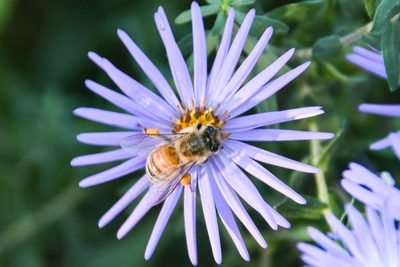
Aromatic Aster
Symphyotrichum oblongifolium
A drought-proof, mounding aster that closes the pollinator season with sheets of blue.
- Full sun
- Dry
- 1.5–2.5 ft
- Blooms Sep–Nov
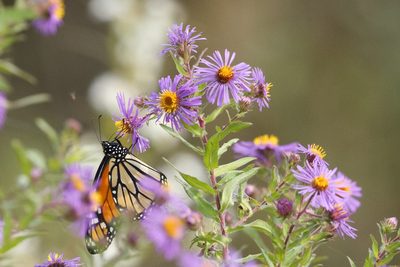
New England Aster
Symphyotrichum novae-angliae
Late-season fuel: clouds of purple daisies feeding migrating monarchs and the last bumblebees of fall.
- Full–part sun
- Average–wet
- 3–5 ft
- Blooms Sep–Oct
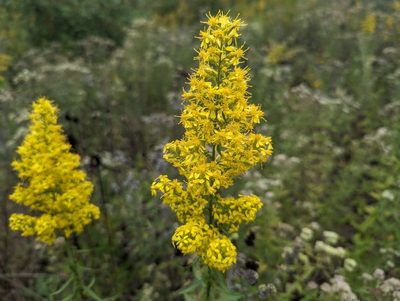
Showy Goldenrod
Solidago speciosa
Upright golden candles that anchor the fall garden, and no, goldenrod doesn't cause hay fever.
- Full–part sun
- Dry–average
- 2–4 ft
- Blooms Sep–Oct
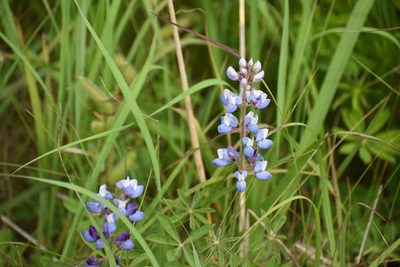
Wild Lupine
Lupinus perennis
The sole host plant of the endangered Karner blue butterfly, thriving in poor sandy soil.
- Full–part sun
- Dry
- 1–2 ft
- Blooms Apr–Jun
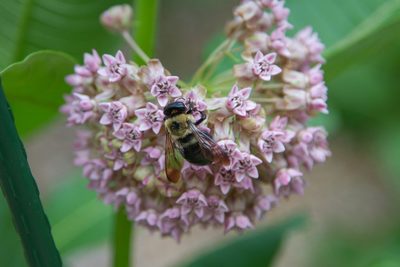
Common Milkweed
Asclepias syriaca
The classic monarch nursery, with honey-scented summer flowers that perfume an entire meadow.
- Full–part sun
- Dry–average
- 3–5 ft
- Blooms Jun–Jul
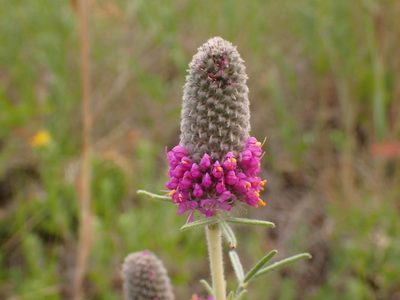
Purple Prairie Clover
Dalea purpurea
Thimble-shaped flowers ringed in orange pollen, a nitrogen-fixing backbone of the dry prairie.
- Full sun
- Dry
- 1–3 ft
- Blooms Jun–Jul
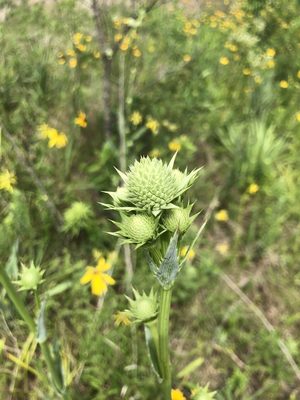
Rattlesnake Master
Eryngium yuccifolium
Architectural yucca-like leaves and golf-ball flower heads give the prairie its modern edge.
- Full sun
- Dry–average
- 3–5 ft
- Blooms Jun–Aug
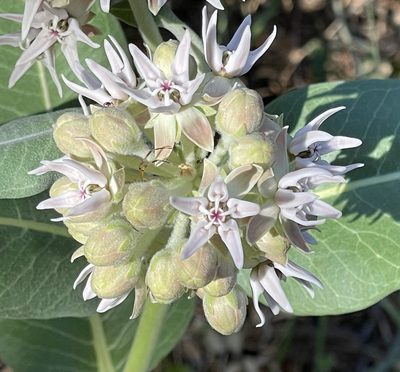
Showy Milkweed
Asclepias speciosa
The West's monarch milkweed, bolder, fuzzier, and more drought-hardy than its eastern cousins.
- Full sun
- Dry–average
- 2–4 ft
- Blooms Jun–Jul
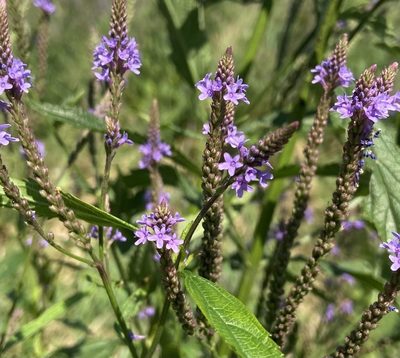
Blue Vervain
Verbena hastata
Candelabras of tiny violet flowers for wet ground, working for small native bees all summer.
- Full–part sun
- Average–wet
- 3–5 ft
- Blooms Jul–Sep
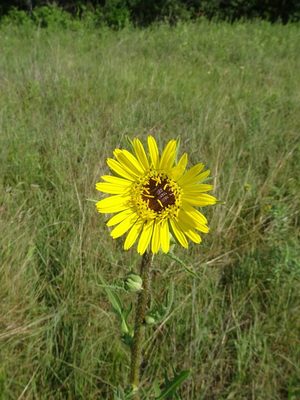
Compass Plant
Silphium laciniatum
A signature tallgrass-prairie plant with a taproot that can plunge fifteen feet down.
- Full sun
- Dry–average
- 5–9 ft
- Blooms Jul–Aug
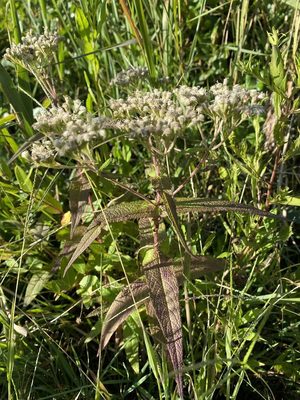
Common Boneset
Eupatorium perfoliatum
Frothy white heads alive with small native bees and wasps, for ground that stays damp.
- Full–part sun
- Average–wet
- 3–5 ft
- Blooms Aug–Sep
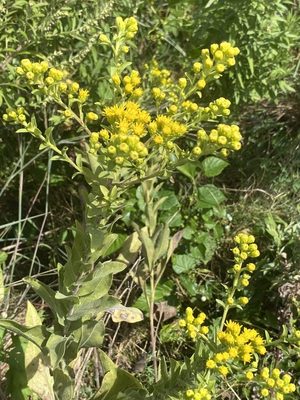
Stiff Goldenrod
Solidago rigida
A prairie goldenrod with flat-topped flower heads that double as a butterfly landing pad.
- Full sun
- Dry–average
- 3–5 ft
- Blooms Aug–Oct